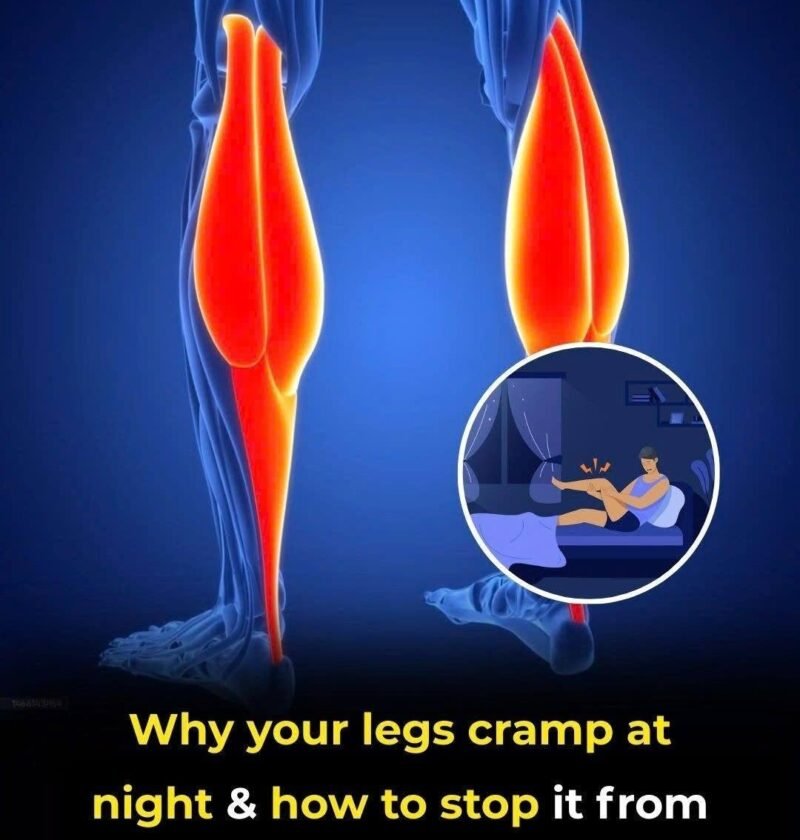
Leg cramps during sleep—often called nocturnal leg cramps—are sudden, involuntary tightening of a muscle, most commonly in the calf. They can be extremely painful but are often harmless.
Common reasons
-
Muscle fatigue or overuse: More walking, standing, exercise, or strenuous activity than usual can increase the chance of cramps.
-
Prolonged sitting or inactivity: Staying in one position for a long time may contribute.
-
Sleeping position: Keeping the foot pointed downward for extended periods can shorten the calf muscle and potentially trigger a cramp.
-
Dehydration: Fluid loss can contribute, particularly after heavy sweating.
-
Pregnancy and aging: Nighttime cramps become more common during pregnancy and with increasing age.
-
Medications or medical conditions: Some medications and conditions affecting nerves, muscles, circulation, or metabolism can be associated with recurrent cramps.
What to do during a cramp
For a calf cramp, straighten the leg and gently pull your toes toward your face. Light massage and standing or walking carefully can also help. Don’t forcefully stretch a severely contracted muscle.
Regular gentle calf stretching, staying adequately hydrated, and maintaining physical activity may help reduce episodes.
When to get medical advice
Talk to a healthcare professional if cramps are frequent, severe, disrupting your sleep, or accompanied by weakness, numbness, swelling, or persistent pain. A suddenly swollen, red, warm, and painful leg—especially on one side—needs prompt medical evaluation because it can have causes other than an ordinary muscle cramp.