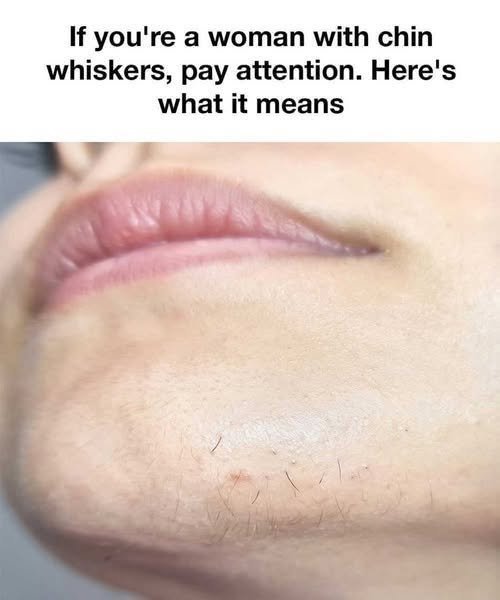
Viral wellness reels and sensationalized beauty blogs love to use dramatic, anxiety-inducing hooks like “Surprised by Chin Whiskers? You’re Not Alone”—often paired with dark warnings—to suggest that finding a stray coarse hair on your chin is a sudden, terrifying sign of total hormonal collapse.
While noticing unexpected facial hair growth can certainly feel startling or frustrating, human hair follicle distribution and hormonal shifts are a normal, well-documented part of life.
Here is a look at why chin whiskers appear, why the clickbait panic misses the mark, and what biological mechanisms are actually at play.
Why Do Chin Whiskers Appear? (The Real Biology)
Just like hair growth anywhere else on the body, chin hair is governed by the interplay between genetics, hair follicle sensitivity, and hormones—specifically androgens (such as testosterone, which both men and women produce):
-
Androgen Sensitivity in Follicles:
-
The Reality: Every woman has circulating androgens. However, individual hair follicles in certain areas—like the chin and upper lip—can become increasingly sensitive to these hormones over time, causing fine vellus hairs to transform into thicker, darker terminal hairs.
-
-
Hormonal Shifts Across the Lifespan:
-
The Reality: As women move through different life stages—particularly perimenopause and menopause—estrogen and progesterone levels naturally decline while androgens remain relatively steady. This shift in the hormonal ratio often unmasks or accelerates coarse hair growth on the lower face.
-
Where the “Hidden Emergency” Hyperbole Goes Wrong
Clickbait wellness pages love to frame every single stray chin hair as a secret siren for catastrophic endocrine disease.
In reality, the vast majority of women who experience occasional chin hairs have completely normal hormone levels. It is an extremely common, benign human trait shaped by genetics and natural aging, rather than an acute medical emergency.
When Hormonal Shifts Do Require Attention (Hirsutism)
While a few stray chin hairs are entirely normal, a condition called hirsutism involves excessive, rapid growth of coarse, dark hair in male-pattern areas (such as the chin, chest, or upper back). This can sometimes point to underlying endocrine conditions:
-
Polycystic Ovary Syndrome (PCOS): One of the most common hormonal disorders, PCOS involves elevated androgen levels, irregular menstrual cycles, and sometimes metabolic shifts.
-
Thyroid or Adrenal Imbalances: Issues affecting hormone-producing glands can occasionally influence hair growth patterns.
What Actually Helps Manage Facial Hair
If stray chin hairs are bothering you cosmetically, safe and straightforward grooming methods can manage them easily:
-
Temporary Removal: Plucking, shaving, waxing, or threading cleanly removes the hair shaft or root. (It is a myth that plucking causes hair to grow back thicker or darker; it merely tapers or blunts the regrowing tip).
-
Long-Term Reduction: Electrolysis (the only FDA-approved method for permanent hair removal) or laser hair reduction can target stubborn follicles if you prefer a clinical solution.
When to See a Doctor
While a few stray hairs are completely harmless, you should consult your primary care physician, a dermatologist, or an endocrinologist if you notice sudden, rapid, widespread hair growth accompanied by other symptoms, such as irregular periods, severe acne, or unexplained weight changes. Otherwise, you can safely skip the panic—a stray chin hair is just normal biology doing its thing!