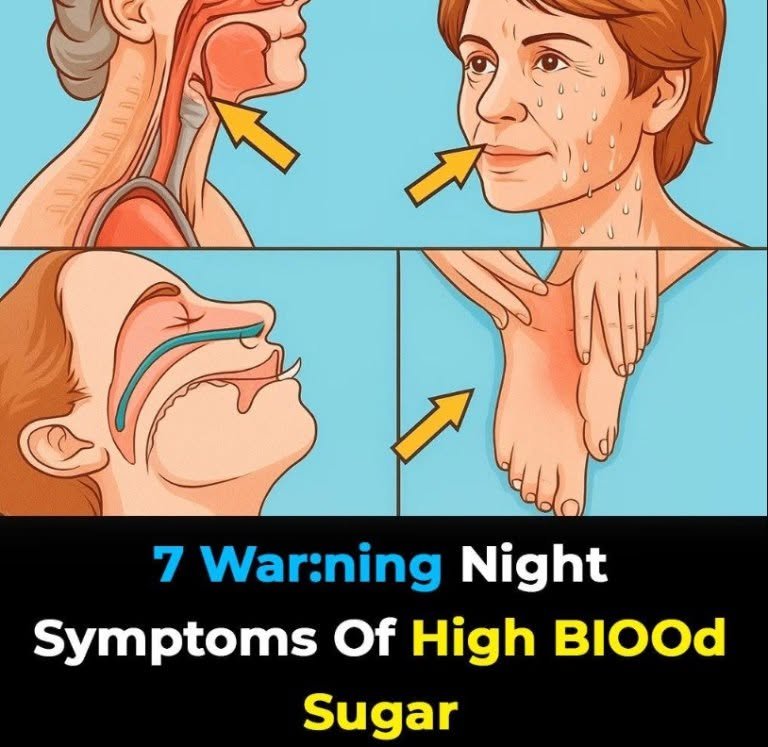
7 Warning Night Symptoms of High Blood Sugar
High blood sugar (hyperglycemia) can sometimes cause symptoms that become particularly noticeable at night. However, these symptoms aren’t specific to diabetes, so they shouldn’t be used to diagnose high blood sugar on their own.
1. Waking up extremely thirsty 💧
Excess glucose in the bloodstream causes the kidneys to pull more water into the urine, which can contribute to dehydration and intense thirst.
2. Frequent nighttime urination 🚽
High blood glucose can cause increased urine production. If you’re repeatedly waking to urinate, especially along with unusual thirst, it’s worth checking your blood glucose.
3. Dry mouth
Dehydration associated with high blood sugar can leave your mouth and throat feeling unusually dry during the night or when you wake up.
4. Restless or poor-quality sleep
Thirst, frequent urination, and other effects of hyperglycemia can interfere with sleep and leave you feeling tired the following day.
5. Night sweats or feeling unusually hot
Sweating isn’t a reliable sign of high blood sugar by itself. Night sweats can also occur with low blood sugar, medications, infections, hormonal changes, anxiety, and many other conditions. If you have diabetes and experience nighttime sweating, checking your glucose can help determine what’s happening.
6. Headache or fatigue in the morning
Persistently elevated glucose can contribute to dehydration and fatigue, although there are many other possible causes of morning headaches or tiredness.
7. Blurred vision
High blood glucose can temporarily affect the lens of the eye, causing blurred vision. New or persistent vision changes should be medically evaluated.
When is high blood sugar an emergency?
Very high blood glucose can lead to diabetic ketoacidosis (DKA) or, particularly in type 2 diabetes, hyperosmolar hyperglycemic state (HHS).
Seek urgent medical care for symptoms such as vomiting, severe abdominal pain, rapid or difficult breathing, confusion, extreme weakness, severe dehydration, or inability to keep fluids down—especially if blood glucose is very high or ketones are present.
The most reliable way to know
Symptoms alone can’t tell you whether your blood sugar is high. If you’re concerned, check your blood glucose with a meter or continuous glucose monitor if you have one. If you repeatedly experience excessive thirst, frequent urination, unexplained weight loss, or fatigue, arrange a medical evaluation and diabetes testing.
Important: If you take insulin or certain diabetes medicines, nighttime symptoms such as sweating, trembling, nightmares, or waking confused may indicate low blood sugar rather than high blood sugar.