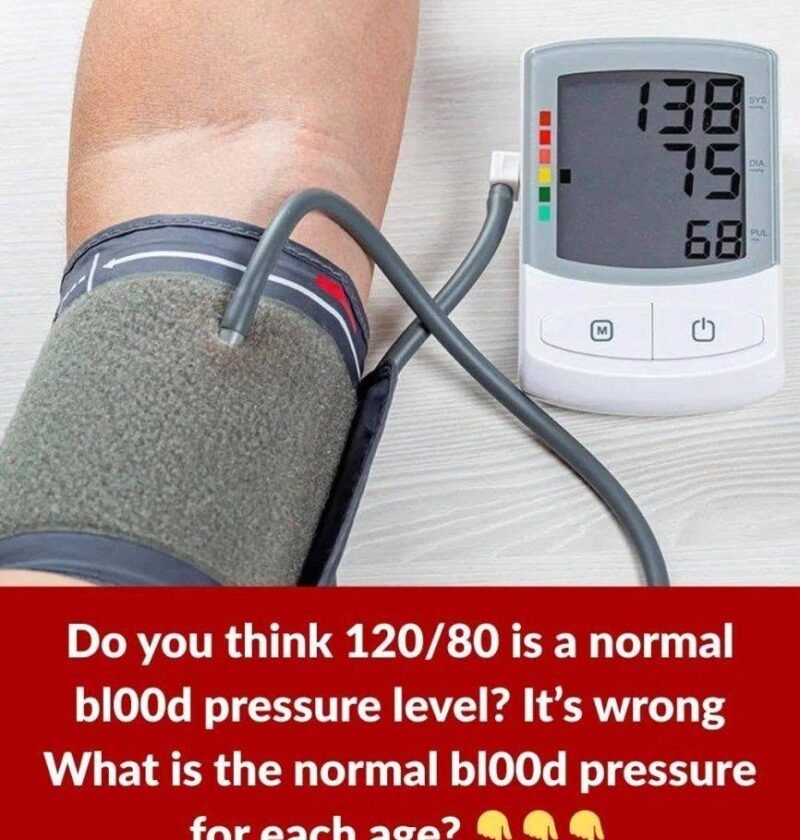
Blood pressure doesn’t have a separate “normal” number for every age. For most adults, normal blood pressure is below 120/80 mmHg, regardless of age.
General guide
| Age | Typical healthy range / guidance |
|---|---|
| Children | Varies substantially with age, sex, and height; pediatric percentiles are used |
| Teenagers | Generally <120/80 mmHg |
| 18–64 | <120/80 mmHg is considered normal |
| 65+ | Treatment targets are individualized; age alone doesn’t make high blood pressure “normal” |
| 80+ | Targets may be adjusted depending on overall health, frailty, medications, and doctor’s assessment |
For adults, the American Heart Association categorizes readings roughly as:
-
Normal: less than 120/80
-
Elevated: 120–129 and less than 80
-
High blood pressure, stage 1: 130–139 or 80–89
-
Stage 2: 140 or higher or 90 or higher
-
Severe hypertension: higher than 180 and/or 120, particularly if accompanied by symptoms
A single high reading doesn’t necessarily mean you have hypertension. Blood pressure should generally be measured correctly and confirmed with repeated readings.
If you give me your age, blood-pressure reading (e.g., 145/90), and whether you take blood-pressure medicine, I can explain what that particular reading means.