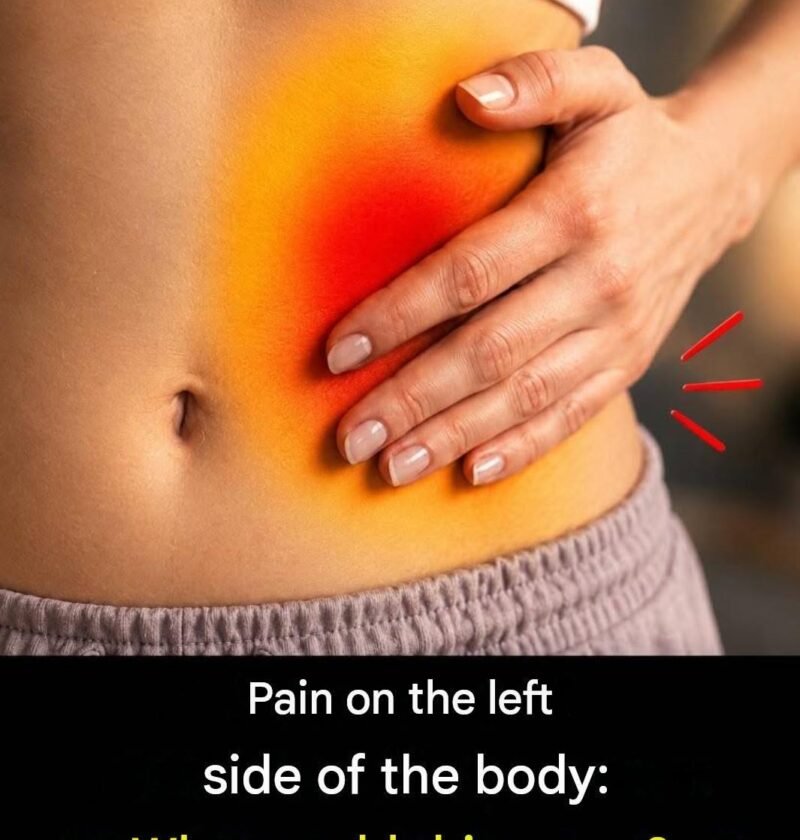
Pain on the left side of the body is a broad symptom rather than a single diagnosis. Because viral health posts often latch onto “left-sided pain” and immediately jump to either a worst-case scare or a single organ myth, the most helpful way to look at it is by location, tissue type, and accompanying signs. Many causes are everyday muscle strains or digestive gas, while others involve the heart, lungs, nerves, kidneys, or abdominal organs that require timely medical evaluation.
Common Causes by Region on the Left Side
1. Left Chest, Shoulder, Upper Back, or Left Arm
-
Musculoskeletal Strain or Rib Irritation: Pulled chest/shoulder muscles, costochondritis (inflammation where ribs meet cartilage), or a pinched nerve in the neck/upper back. This pain often changes when you press on the spot, twist, lift your arm, or take a deep breath.
-
Heart and Cardiovascular Causes: Reduced blood flow or heart muscle strain (such as angina or a heart attack) can cause pressure, squeezing, fullness, or aching in the left chest that may radiate to the left arm, shoulder, jaw, or back—though heart pain can also feel subtle or atypical.
-
Lung or Pleural Issues: Inflammation of the lining around the left lung (pleurisy), pneumonia, or a collapsed lung (pneumothorax), typically worsening with breathing or coughing and sometimes accompanied by shortness of breath.
2. Left Upper and Lower Abdomen
-
Gas, Bloating, or Constipation: Trapped gas or stool in the descending or sigmoid colon (which runs down the left side) is a very frequent cause of cramping, sharp twinges, or aching that shifts or eases after passing gas or having a bowel movement.
-
Stomach or Pancreatic/Splenic Causes: Gastritis, acid reflux, or—less commonly—issues involving the spleen or tail of the pancreas in the upper left abdomen.
-
Lower Left Bowel or Pelvic Causes: Diverticulitis (inflammation/infection of small pouches in the colon wall, more common in older adults), irritable bowel syndrome (IBS), or—in people with ovaries—left-sided ovarian cysts or pelvic issues.
3. Left Flank, Lower Back, or Left Leg
-
Muscle or Spinal Nerve Irritation: Lower back strain or sciatica/nerve compression sending aching, burning, or shooting pain down the left hip or leg.
-
Left Kidney or Urinary Tract: A kidney stone or left kidney infection often causes aching or sharp waves of pain in the left flank/back that may wrap toward the lower abdomen or groin, sometimes with urinary changes or fever.
-
Left Leg Circulation or Vein Issues: Cramping or aching in the left leg can range from simple muscle fatigue to—if accompanied by one-sided swelling, warmth, redness, or tenderness—a possible blood clot (DVT).
Red Flags: When to Seek Urgent or Emergency Care
Do not wait or rely on home remedies if left-sided pain comes with any of these warning signs:
-
Chest pain, pressure, tightness, or heaviness, especially if it spreads to the left arm, jaw, neck, shoulder, or back, or comes with sweating, nausea, lightheadedness, or shortness of breath.
-
Sudden difficulty breathing or sharp chest pain that worsens rapidly with breathing.
-
Signs of a stroke, such as sudden weakness or numbness on one side of the face, arm, or leg, trouble speaking, confusion, or sudden vision/balance changes.
-
Severe, sudden, or worsening abdominal pain, a rigid/tender belly, persistent vomiting, inability to keep fluids down, or bloody stools/vomit.
-
High fever, chills, or painful urination alongside flank/back pain (possible kidney infection).
-
Sudden swelling, warmth, redness, or severe pain in one leg.
When Routine Medical Evaluation Makes Sense
Even without emergency red flags, you should have left-sided pain evaluated by a doctor if it keeps coming back, lasts more than a few days without a clear harmless explanation, wakes you from sleep, or gradually worsens. Simple details—such as whether the pain is sharp or dull, constant or triggered by movement/eating/breathing, and what other symptoms are present—help narrow down what needs attention.