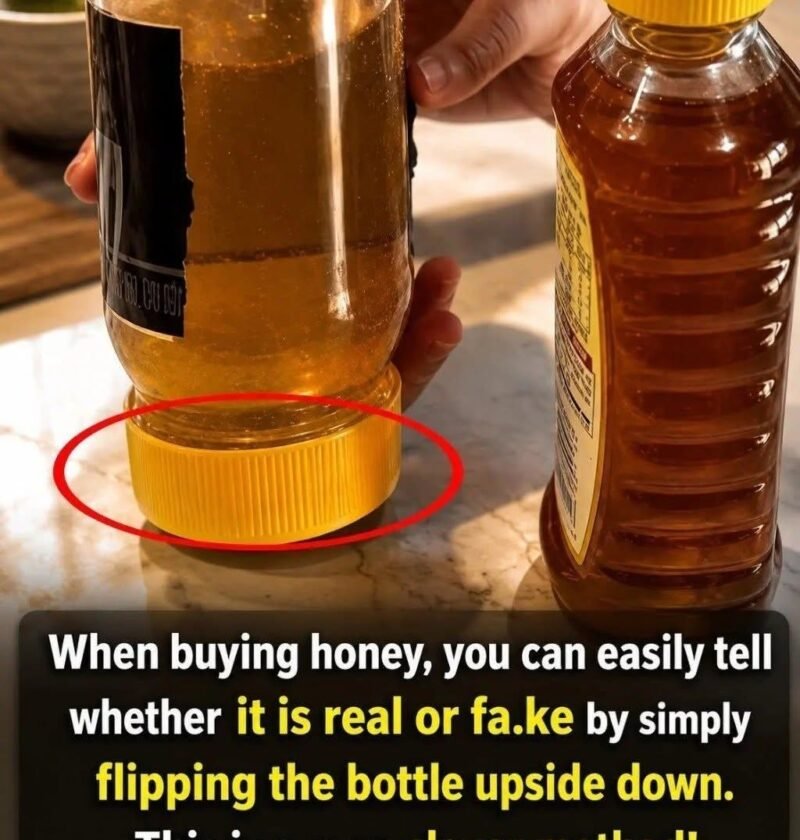
Viral posts promising “how to tell real honey” usually push kitchen party tricks—like dripping honey into water, lighting a match with it, or checking if it crystallizes—that sound clever but fail in the real world. Honey adulteration is a genuine global issue (often involving cheap syrups like rice, corn, or cane sugar, or ultra-filtering out pollen to hide origins), yet you cannot reliably prove whether a jar is pure honey with a spoon, a lighter, or a glass of water.
Why Most Viral “Honey Tests” Are Unreliable
-
The “Crystallization” Myth: Many people think real honey stays liquid forever, while others claim only real honey crystallizes. In reality, almost all pure honey eventually crystallizes as natural glucose separates from water—especially raw, unheated honey or varieties higher in glucose (like rapeseed/canola or clover). Conversely, honey that is heavily heated or blended with high-fructose syrups may stay liquid longer. Crystallization is a sign of natural sugar chemistry, not a definitive purity pass/fail test.
-
The Water-Dissolving Trick: Adulterated syrups and real honey both contain sugars and water, so how quickly a drop sinks or dissolves depends heavily on water content, temperature, and viscosity—not purity.
-
The Flame / Match Trick: Whether a honey-coated wick or match lights has to do with moisture content and flammability, not whether cane or rice syrup was mixed in. Pure honey with slightly higher moisture won’t magically pass a lighter test, and fake syrups can still burn.
-
The “Ants Won’t Touch It” Myth: Ants are attracted to sweet carbohydrates. If ants ignore a spill, it is usually because the honey is too thick/viscous or contains strong floral/aromatic compounds, not because it is “fake.”
What Actually Matters When Buying Real Honey
Because home chemistry tricks fall short, reliable authenticity comes down to sourcing, transparency, and physical clues rather than parlor stunts:
| Clue / Factor | What It Tells You | Limitation |
| Crystallization / Texture | Natural sugars can form fine or coarse crystals over time; raw/unfiltered honey often has tiny pollen/wax particles or slight cloudiness. | Some pure honeys (like acacia or high-fructose varieties) stay liquid for a long time. |
| Flavor & Aroma Complexity | Real floral honey usually has layered aroma, subtle floral or earthy notes, and a lingering finish rather than flat, one-note sweetness. | Mild honeys can taste delicate, and heavy flavoring/syrups can be tricky to spot by taste alone. |
| Labeling & Traceability | Reputable producers list floral source, harvest region/country, batch/lot info, and clear producer details. | Vague labels (“product of multiple countries”) offer less transparency. |
| Trusted Source / Beekeeper | Buying directly from reputable apiaries or established, transparent brands lowers the risk of mystery syrups. | Even small sellers can occasionally lack lab testing. |
True verification of honey adulteration or sugar syrups requires laboratory testing (such as stable carbon isotope analysis or chromatography)—not a household kitchen test.
Practical Tips for Choosing Better Honey
-
Skip the Viral Tricks: Treat water, thumb, ant, and flame tests as entertainment rather than proof of purity.
-
Look Beyond “Clear and Runny”: Crystal-clear, uniformly golden honey is often heavily filtered and gently heated for shelf appeal. That doesn’t automatically make it fake, as heat and filtration are standard commercial steps, though raw honey retains more natural pollen and delicate aromatics.
-
Check Ingredient Lists & Origins: Real honey is a single ingredient—just honey. Be cautious of jars with added syrups, flavorings, or unclear sourcing if you want pure honey.
-
Keep Nutrition in Perspective: Even the purest, most expensive raw honey is still mostly sugar (fructose and glucose) and calories. Enjoy it for flavor and culinary use rather than treating it as a cure-all.