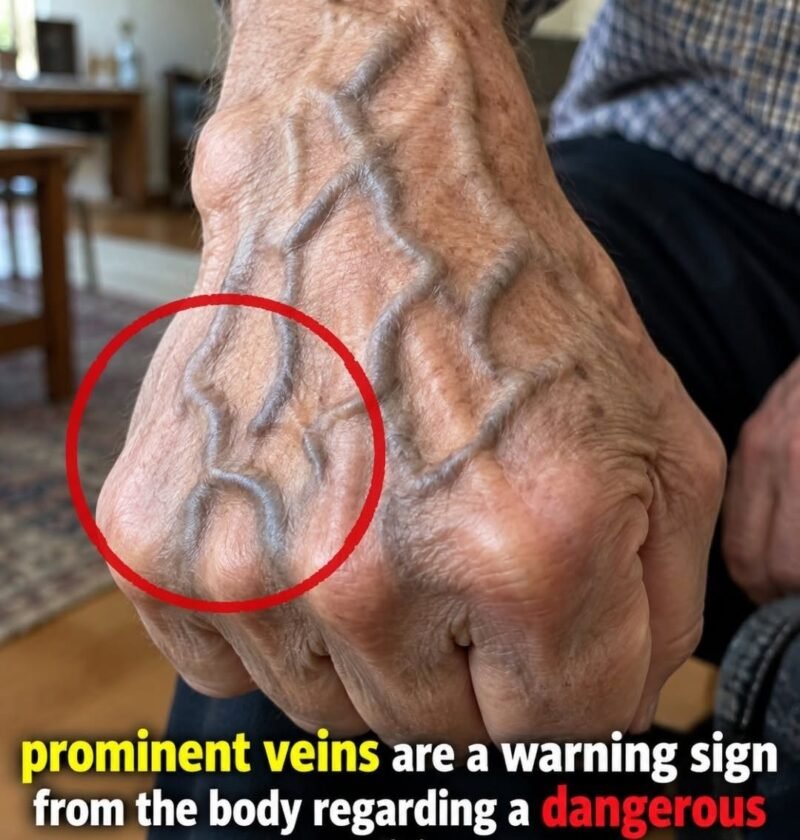
Viral health blogs and sensationalized wellness reels love to use dramatic, anxiety-inducing clickbait hooks like “Visible Blue Veins After 60: What Your Blood Flow Is Screaming” to terrify you into believing that every prominent blue or greenish vein on your hands, legs, or temples is a sign of an impending vascular disaster or an exploding heart.
While changes in your skin and blood vessels are a normal part of aging, the physiological reality of visible veins is usually a matter of skin thinning and superficial anatomy—not an emergency warning scream.
Here is a look at why veins become more visible as you age, why the clickbait panic misses the mark, and when vascular changes genuinely warrant a doctor’s evaluation.
Why Do Veins Become More Visible After 60? (The Real Biology)
When you notice prominent blue veins on the back of your hands, arms, or legs as you enter your later decades, it is almost always the result of normal, structural changes in your skin and tissue:
-
Skin Thinning and Loss of Subcutaneous Fat:
-
The Reality: Beneath your skin lies a layer of subcutaneous fat that acts like a soft cushion, masking the superficial blood vessels running just beneath the surface. As we age, we naturally lose some of this underlying fat layer, and the dermis thins as collagen and elastin production slow down. With less padding and a more translucent skin barrier, healthy veins simply become more visible to the naked eye.
-
-
Decreased Skin Elasticity:
-
The Reality: Because aging skin loses its youthful firmness and snap, it fits less tightly over underlying structures, allowing superficial veins to show through more prominently.
-
Where the “Vascular Emergency” Hyperbole Goes Wrong
Clickbait articles often lump harmless, age-related skin transparency together with serious vascular diseases like deep vein thrombosis (DVT) or severe arterial blockages, scaring people into thinking their blood is trapped or under catastrophic pressure.
In reality, color is an optical illusion: deoxygenated blood is dark red, but when viewed through layers of skin and tissue, light wavelengths scatter in a way that makes superficial veins appear blue or greenish. The mere visibility of a healthy, functioning vein has nothing to do with internal organ failure or blood “screaming” for help.
The Real Vascular Conditions to Watch For
While cosmetic prominence of surface veins is normal, true vascular issues involve mechanical valve failure or restricted circulation. It is helpful to distinguish between normal aging veins and clinical conditions:
-
Varicose Veins:
-
What they are: Enlarged, twisted, and bulging veins usually found on the legs. They happen when tiny one-way valves inside the veins weaken, allowing blood to flow backward and pool due to gravity, increasing pressure within the vessel.
-
-
Spider Veins (Telangiectasias):
-
What they are: Tiny, thread-like red, blue, or purple clusters visible right near the surface of the skin, caused by minor dilation of superficial capillaries. They are generally harmless and primarily cosmetic.
-
-
Chronic Venous Insufficiency (CVI):
-
What it is: A more advanced condition where superficial or deep vein valves fail to efficiently pump blood back up to the heart, leading to persistent swelling, aching, and skin changes in the lower legs.
-
What Actually Supports Healthy Circulation After 60
If you want to maintain strong vascular health and keep your blood flowing efficiently as you age, evidence-based habits far outweigh anti-aging panic:
-
Regular Movement: Walking, swimming, and cycling activate your calf muscle pump, which actively squeezes deep veins to help push blood back up toward your heart against gravity.
-
Elevate Your Legs: Resting with your legs elevated above heart level for 15 to 20 minutes at the end of the day relieves venous pressure and reduces fluid pooling.
-
Stay Hydrated: Maintaining optimal hydration keeps your blood viscosity balanced, allowing it to flow smoothly through both arteries and veins.
-
Compression Therapy: If recommended by a physician for aching or swollen legs, wearing graduated compression stockings provides external support to assist surface vein valves.
When to Actually See a Doctor
While prominent, visible veins on the hands or temples due to thinning skin are completely harmless, you should schedule an evaluation with a physician or a vascular specialist if you notice clinical red flags in your legs:
-
Persistent Pain or Heaviness: A constant aching, throbbing, or heavy feeling in your legs, especially after standing for long periods.
-
Unilateral Swelling: Noticeable swelling in only one leg, accompanied by redness, warmth, or tenderness (which can indicate a blood clot like DVT).
-
Skin Discoloration or Sores: Darkening of the skin around the ankles, skin hardening, or slow-healing ulcers/sores near the lower leg.
Don’t let sensationalized headlines prey on your fears over normal aging skin—understanding your vascular anatomy and staying active is the best way to keep your circulation strong and your mind at ease!