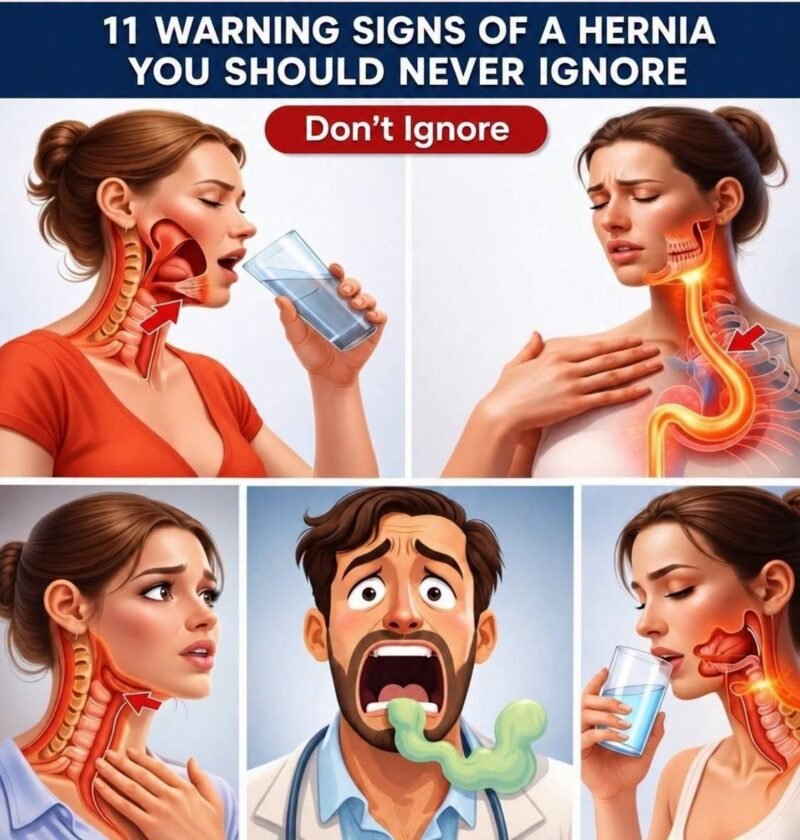
A hiatal hernia occurs when part of the stomach pushes upward through the diaphragm into the chest. Many people have no symptoms at all, while others develop reflux-related symptoms.
10 possible signs and symptoms
Heartburn, especially after meals or when lying down
Acid or food coming back up into the throat
Chest or upper-abdominal discomfort
Difficulty or discomfort when swallowing
Frequent belching
Bloating or feeling unusually full after eating
Regurgitation, particularly at night
Chronic cough or throat irritation, sometimes related to reflux
Hoarseness or a sore throat
Nausea or indigestion
These symptoms don’t prove you have a hiatal hernia. GERD and several other digestive conditions can produce similar symptoms.
When to seek medical attention
Get urgent medical help for severe or persistent chest pain, vomiting blood, black/tarry stools, fainting, or significant difficulty swallowing. Chest pain should not automatically be attributed to a hiatal hernia because heart problems can feel similar.
Treatment depends on symptoms and may include smaller meals, avoiding lying down soon after eating, weight management when appropriate, and medications for reflux. Large or complicated hiatal hernias sometimes require surgical treatment.