What the Clickbait Usually Refers To
-
Fingernail Growth Rate: Research published decades ago (and popularized on longevity podcasts) observed that fingernail growth slows slightly as humans age—typically dropping by roughly 0.5% per year after early adulthood. Faster nail growth reflects brisk cellular turnover and good peripheral circulation, whereas unusually slow growth can point to aging, poor circulation, or nutritional gaps. However, nail growth speed is influenced by genetics, climate, and hand use, making it far too imprecise to predict an individual’s lifespan.
-
Terry’s Nails: Nails that appear mostly white or opaque with a narrow pink or brown band at the very tip. While sometimes a harmless sign of normal aging, Terry’s nails are clinically linked to liver cirrhosis, chronic heart failure, kidney disease, or diabetes.
-
Digital Clubbing: The fingertips enlarge and the nails curve downward around the fingertips like an upside-down spoon. Clubbing develops gradually when oxygen levels in the blood stay chronically low, often pointing to lung conditions, heart defects, or inflammatory bowel disease.
Other Nail Changes Worth Paying Attention To
| Nail Appearance | What It Looks Like | Common Causes |
| Beau’s Lines | Horizontal indentations or grooves running across the nail plate. | A temporary pause in nail growth caused by severe illness, high fever, major stress, or chemotherapy. |
| Koilonychia (“Spoon Nails”) | Thin nails that scoop inward, holding a drop of liquid. | Most commonly linked to iron-deficiency anemia or reduced blood flow to the fingers. |
| Splinter Hemorrhages | Tiny vertical reddish-brown lines under the nail that look like wood splinters. | Usually minor nail trauma (bumping a finger), though multiple spontaneous lines can occasionally signal heart valve infection (endocarditis) or vasculitis. |
| Dark Vertical Streak | A single dark brown or black band running from cuticle to tip. | Often benign pigment in darker skin tones, but a new or widening streak on a single nail requires evaluation to rule out subungual melanoma. |
| Pale or Bluish Nail Beds | Nails lacking healthy pink color or looking faintly blue/purple. | Anemia, poor circulation, cold exposure, or low blood oxygen. |
What Is Usually Harmless
-
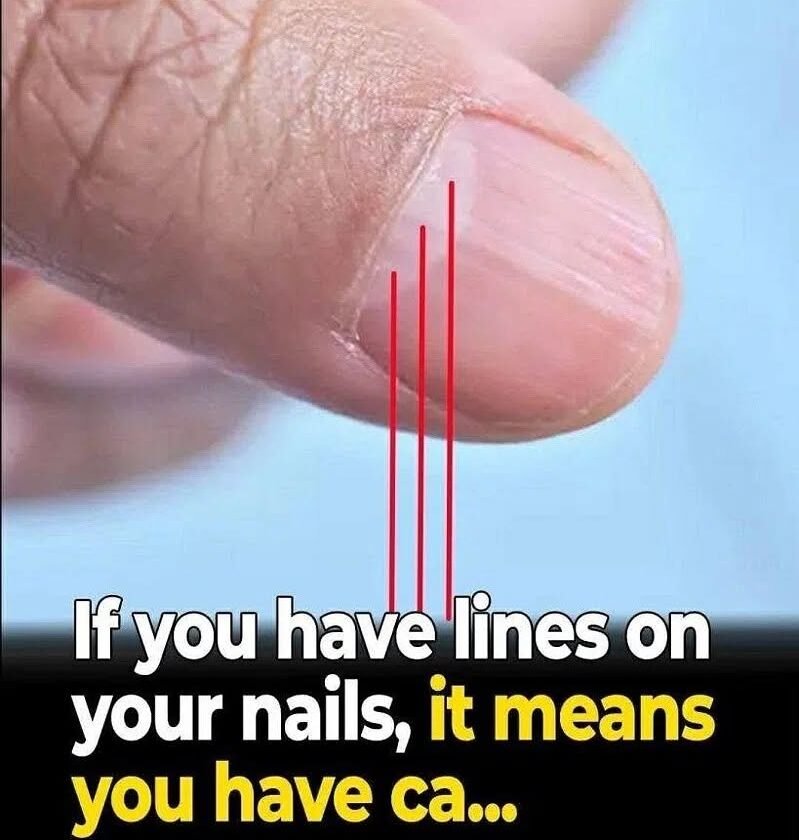
Vertical ridges running from cuticle to tip are a normal part of aging—similar to fine wrinkles on the skin.
-
Scattered white spots (leukonychia) are almost always caused by minor bumps to the nail base weeks earlier, not a calcium deficiency.