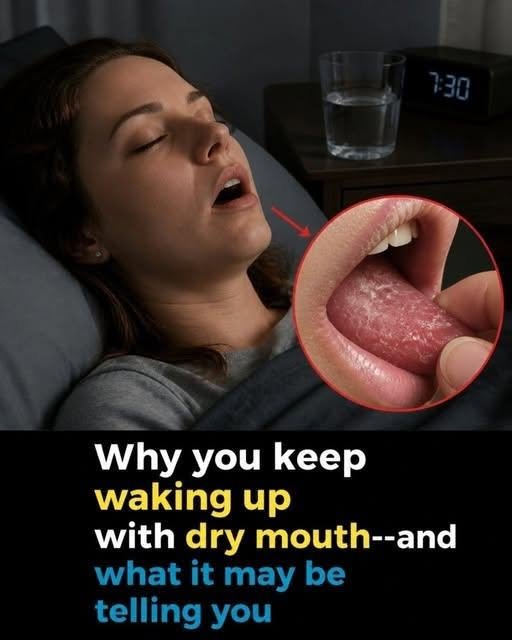
Waking up with a dry mouth is common and usually has a simple explanation, but persistent dry mouth can sometimes point to an underlying problem.
What it can mean
-
Breathing through your mouth at night: A blocked nose, allergies, snoring, or sleeping with your mouth open can dry out your mouth.
-
Dehydration: Not drinking enough fluids, heavy sweating, or alcohol can contribute.
-
Medication side effects: Antihistamines, decongestants, antidepressants, some blood-pressure medicines, and many other drugs can reduce saliva.
-
Sleep apnea: Dry mouth can accompany loud snoring, breathing pauses during sleep, morning headaches, or excessive daytime sleepiness.
-
High blood sugar/diabetes: Dry mouth together with unusual thirst and frequent urination can warrant a blood-glucose check.
-
Smoking or vaping: Both can contribute to oral dryness.
-
Reduced saliva production: Salivary-gland disorders and some autoimmune conditions can cause persistent dryness.
What you can do
Keep hydrated during the day, treat nasal congestion if present, avoid smoking, and consider sugar-free gum or lozenges to stimulate saliva. Good dental hygiene is particularly important because chronic dry mouth increases the risk of cavities and gum disease.
If your dry mouth happens most mornings for several weeks, or you have difficulty swallowing, mouth sores, significant thirst/urination, or symptoms suggesting sleep apnea, it’s worth discussing with a doctor or dentist.
If you tell me whether you snore, wake up thirsty, urinate frequently at night, and what medicines you take, I can help narrow down the likely cause.