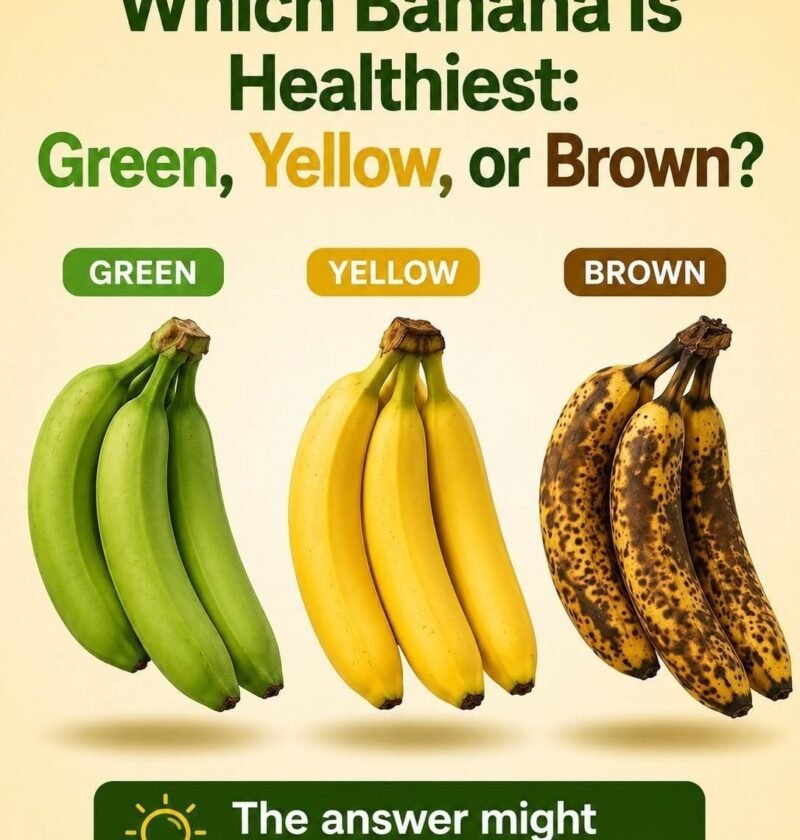
There is no single “healthiest” banana—as a banana ripens from green to yellow to brown, enzymes convert complex starch into simple sugars, shifting its nutritional benefits depending on your digestive and blood-sugar goals.
How Ripeness Changes a Banana’s Nutrition
| Ripeness Stage | What Happens Inside | Best For | Potential Downsides |
| Green (Unripe) | Up to 70–80% of carbs are and pectin; very low sugar. | Blood sugar control (lowest glycemic impact), feeding beneficial gut bacteria, longer fullness. | Harder to digest; can cause gas or bloating, and tastes firm and chalky. |
| Yellow (Ripe) | Resistant starch converts into simple sugars (sucrose, glucose, fructose); antioxidants rise. | Steady, easily digested energy (pre- or post-workout), gentle digestion, balanced sweetness. | Higher glycemic response than green bananas. |
| Brown-Spotted (Overripe) | Nearly all starch has turned into free sugars; antioxidants peak as chlorophyll breaks down. | Maximum antioxidant content, soothing an upset stomach, natural sweetener for baking or oats. | Fastest blood-sugar spike; lower fiber and slightly lower vitamin C and B vitamins. |
(Across all ripeness stages, one medium banana provides roughly 100–110 calories, 400–420 mg of potassium, vitamin B6, and manganese.)
Which One Fits Your Goal Best?
-
Pick Green or Barely Yellow if: You are managing diabetes, prediabetes, or insulin resistance, or want steady energy without a rapid glucose spike.
-
Pick Firm Yellow if: You want an everyday snack that digests comfortably while still giving you moderate fiber and natural sweetness.
-
Pick Brown-Spotted if: You want quick fuel before intense exercise, have a sensitive stomach, or want to sweeten smoothies, dalia (porridge), or baked goods without adding refined sugar.
-
Discard Moldy or Fermenting Bananas: Dark sugar spots on the peel are harmless, but throw away any banana with fuzzy mold, leaking liquid, or a sour, fermented alcohol smell.
Blood-sugar tip: If you enjoy sweet yellow bananas but want to slow down the glucose rise, pair one with a small handful of almonds or walnuts, plain yogurt, or a spoonful of unsweetened peanut butter.