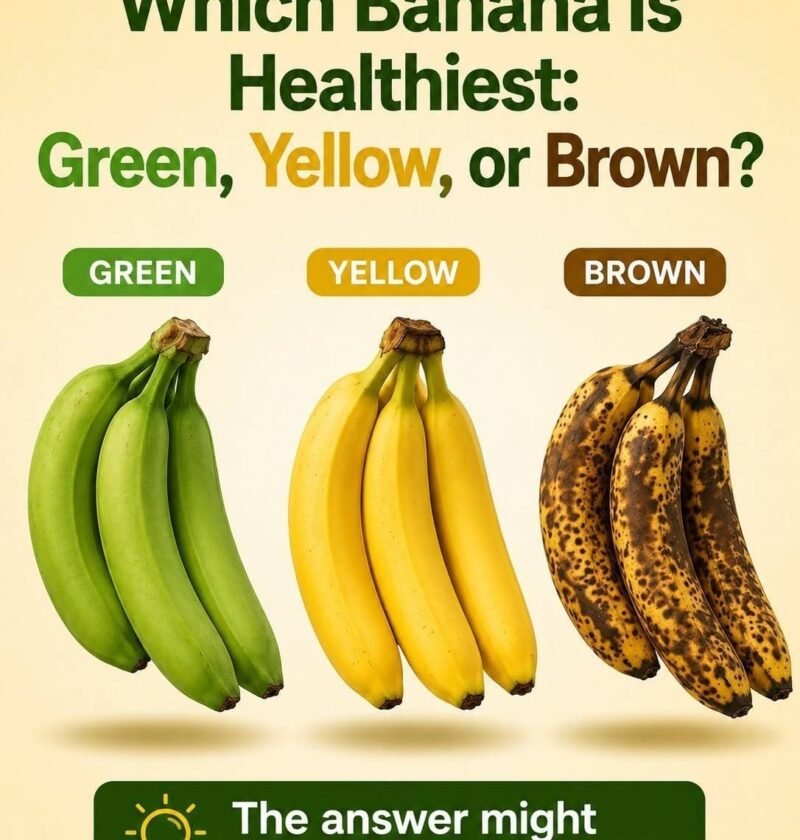
Nutritional Breakdown by Ripeness Stage
| Ripeness Stage | Best For | Key Nutritional Shift | Digestion & Glycemic Impact |
| Green (Unripe) | Blood sugar control, gut microbiome health, steady energy. | High in resistant starch (acts like soluble fiber) and pectin; low in simple sugars. | Digests slowly, causes a minimal blood sugar spike, and feeds beneficial gut bacteria—though it can cause mild bloating in sensitive stomachs. |
| Yellow (Just Ripe) | Everyday balanced nutrition, pre-workout fuel, easy digestion. | Balanced mix of digestible carbs, fiber, potassium (~420 mg), vitamin B6, and vitamin C. | Easy to digest while still holding moderate fiber to keep you full without overly spiking blood sugar. |
| Yellow with Brown Spots | Quick workout energy, immune support, high antioxidants. | Starches have mostly converted to simple sugars (glucose, fructose, sucrose); antioxidant levels peak. | Absorbs rapidly for fast energy; easier on the stomach for people recovering from illness, though higher on the glycemic index. |
| Overripe / Brown | Natural baking sweetener, smoothies, gentle digestion. | Maximum sugar concentration and high antioxidants; slightly lower vitamin C and fiber content. | Very soft and fast-digesting; best used in small amounts to replace refined sugar in recipes. |
Which One Should You Pick?
-
If you are managing blood sugar, insulin resistance, or weight: Choose slightly green or firm yellow bananas. The resistant starch slows glucose absorption and keeps you satisfied longer.
-
If you need quick energy before or after exercise: Choose a ripe yellow or lightly spotted banana. The easily accessible sugars and potassium replenish muscle glycogen and electrolytes quickly.
-
If you have a sensitive stomach (like IBS): A firm, yellow (just-ripe) banana is usually best tolerated—very green bananas are high in fermentable resistant starch, while very brown bananas are higher in FODMAPs (fructans).
-
If you want the best all-around daily snack: A classic yellow banana with minimal spotting gives you the sweet spot of potassium, B6, fiber, and antioxidants without excessive sugar.
What About Banana Varieties?
-
Cavendish (Standard Yellow): The everyday staple—high in potassium and B6.
-
Red Bananas: Slightly sweeter and softer when ripe, containing higher levels of beta-carotene and vitamin C than yellow bananas.
-
Plantains: Larger, starchier cooking bananas higher in fiber and vitamins A and C—nutritious when baked or boiled, though less healthy when deep-fried.