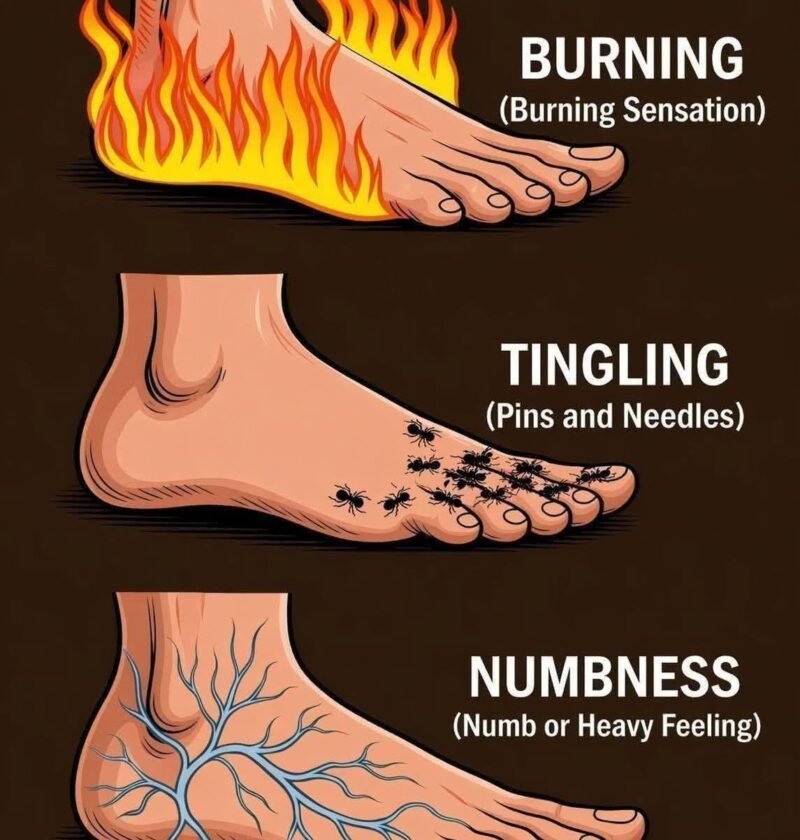
Viral health blogs and sensationalized wellness reels love to use dramatic, anxiety-inducing hooks to suggest that any minor tingling in your toes is an immediate sign of irreversible nerve destruction or impending paralysis.
While burning, numbness, and tingling in the feet (clinically referred to as paresthesia) are symptoms that deserve careful attention, the physiological reality ranges from temporary mechanical nerve compression to specific metabolic or circulatory issues—not an instant medical catastrophe.
Here is a look at what actually causes these sensations, why the clickbait panic misses the mark, and when foot symptoms genuinely require a physician’s evaluation.
What Actually Causes Burning, Numbness, and Tingling?
Your feet are densely packed with sensory nerve fibers that transmit information about temperature, pressure, and touch all the way up to your spinal cord and brain. When those signals get scrambled, blocked, or irritated, you experience strange sensations:
-
Mechanical Nerve Compression (Temporary Paresthesia):
-
The Reality: If you sit with your legs crossed too long, wear shoes with a dangerously narrow toe box, or sleep in an awkward position, you temporarily compress peripheral nerves and restrict local blood flow. Once you shift your position and blood rushes back, you feel that classic “pins and needles” prickle as the nerves wake up.
-
-
Peripheral Neuropathy (Nerve Damage):
-
The Reality: When nerves are chronically damaged over time, they begin misfiring spontaneously. This can manifest as a persistent burning warmth, a feeling of walking on cotton or pebbles, or outright numbness in the feet and toes.
-
-
Local Entrapment (e.g., Tarsal Tunnel Syndrome):
-
The Reality: Just like carpal tunnel syndrome in the wrist, the tibial nerve can become compressed as it passes through a narrow space inside the ankle, causing localized burning, pain, and tingling along the sole of the foot.
-
Where the “Nerve Failure” Hyperbole Goes Wrong
Clickbait wellness articles often claim that a single evening of tingling feet means your nervous system is permanently breaking down. In reality, temporary nerve irritation from footwear, a long run, or a poor sitting posture is extremely common, completely harmless, and resolves quickly once pressure is relieved.
However, when burning and numbness are persistent, chronic, or progressive, they point to systemic or localized medical factors that do need investigation:
-
Diabetic Peripheral Neuropathy: Chronically high blood sugar levels over years can damage the delicate blood vessels (vasa nervorum) that feed your peripheral nerves, leading to a classic “stocking-glove” pattern of numbness starting in the toes and moving upward.
-
Nutritional Deficiencies: As discussed previously, a severe lack of Vitamin B12 impairs the protective myelin sheath surrounding your nerves, causing persistent tingling and numbness.
-
Chronic Alcohol Use or Toxins: Excessive alcohol intake or exposure to certain toxins can impair nerve metabolism and function.
What Actually Helps Relieve Minor Foot Discomfort
If your feet feel fatigued, tingly, or mildly irritated after a long day on your feet, simple physical care makes a major difference:
-
Check Your Footwear: Ensure your shoes have a wide enough toe box to prevent compressing your forefoot and squeezing your nerves and blood vessels.
-
Gentle Movement and Stretching: Rolling your feet over a tennis ball, stretching your calves, and flexing your ankles restores blood flow and relieves pressure on compressed tissues.
-
Manage Blood Sugar and Nutrition: Keeping metabolic health in check and ensuring adequate B-vitamin intake protects the long-term structural integrity of your peripheral nerves.
When to Actually See a Doctor
While occasional “pins and needles” from sitting cross-legged is normal, you should schedule an evaluation with your primary care physician or a neurologist if you notice these clinical red flags:
-
Persistent or Worsening Symptoms: Numbness, burning, or tingling that doesn’t go away, happens daily, or gradually creeps up from your toes into your ankles and lower legs.
-
Loss of Protective Sensation: If you find you cannot properly feel temperature, sharp objects, or when you are stepping on something (which dramatically increases the risk of unnoticed foot injuries).
-
Weakness or Balance Issues: Difficulty lifting the front of your foot (foot drop), stumbling frequently, or feeling unsteady when walking in the dark.
Don’t let sensational headlines turn a temporary foot cramp or tight shoe pressure into a midnight panic—understanding your footwear, your circulation, and your metabolic health is the best way to keep your feet comfortable and healthy!