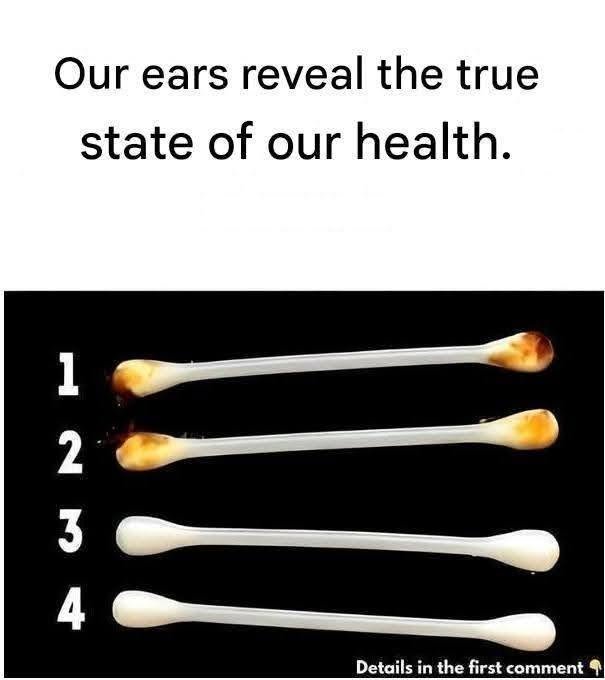
👂 Can Your Ears Reveal the State of Your Health?
Your ears can sometimes provide clues about your health, but viral claims that you can diagnose serious diseases simply by looking at your ears are often exaggerated.
Here are some ear-related changes worth knowing about:
-
Hearing loss — Gradual hearing loss is common with aging, but it can also result from noise exposure, earwax, medications, infections, or other conditions.
-
Persistent ringing (tinnitus) — Ringing, buzzing, or humming can have many causes. New or persistent tinnitus deserves evaluation.
-
Earwax buildup — Excess wax can cause temporary hearing loss, fullness, itching, or ringing.
-
Pain or discharge — Can indicate an infection or other ear problem and shouldn’t be ignored.
-
Dizziness or balance problems — The inner ear plays an important role in balance, although dizziness has many possible causes.
-
A sudden drop in hearing — This is particularly important. Sudden sensorineural hearing loss can require urgent medical evaluation.
-
Changes in the earlobe — You may see claims that certain earlobe creases predict heart disease. Research has explored this association, but an earlobe crease cannot diagnose heart disease or predict an individual’s future health.
-
Pale or bluish skin — A change in skin color can have many causes and shouldn’t be interpreted as a diagnosis from appearance alone.
What about “ears reveal your true health”?
There is some truth behind the idea that ears can provide health clues, because hearing and balance are connected to several parts of the body. But your ears cannot give a complete picture of your overall health.
If you experience sudden hearing loss, severe dizziness, ear bleeding, significant pain, or new neurological symptoms, seek medical attention promptly.
For ongoing hearing difficulties, a hearing test and examination by a healthcare professional are much more informative than trying to interpret the appearance of your ears yourself.