What the Viral Plastic Bottle Hack Claims vs. Reality
| Viral Claim | What Actually Happens in the Machine | Safer, Proven Alternative |
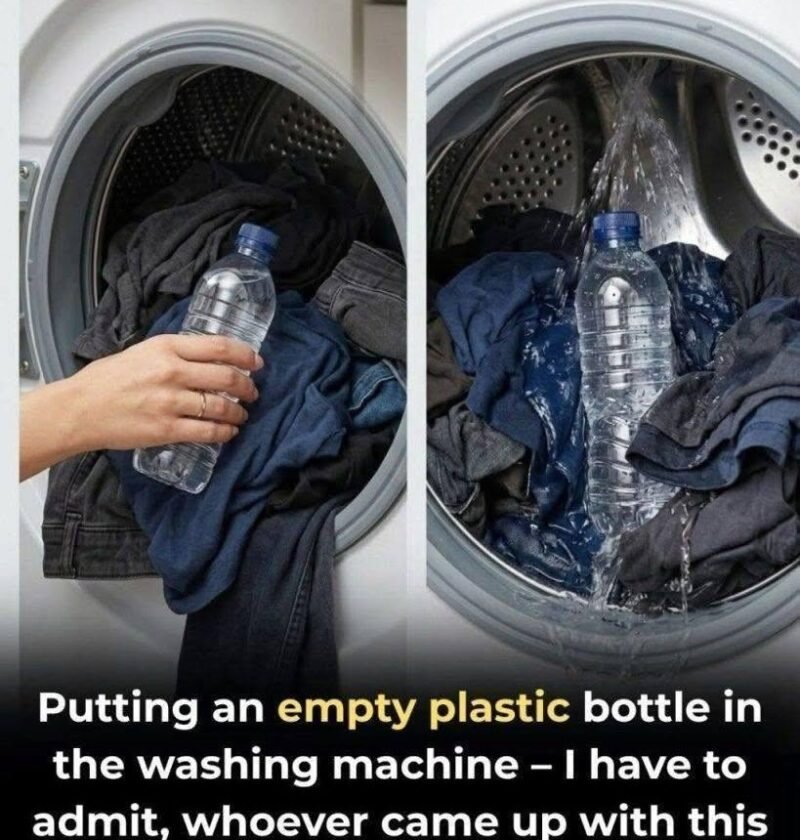
| “Boosts scrubbing power and removes stubborn stains in the washer” | Smooth PET water bottles simply bob on top of the water or slap loosely against wet fabric; they cannot scrub stains out of fibers or replace surfactants and enzymes in detergent. |
• Pre-treat stains directly with liquid detergent or an enzyme stain remover for 10–15 minutes before washing
• Avoid overstuffing the drum (leave a hand’s width of space at the top so clothes rub gently against each other)
|
| “Traps pet hair and lint like a magnet” | Smooth plastic has no texture or adhesive surface to capture lint or fur; any hair you see stuck afterward is just random wet cling. | • Use reusable silicone/microfiber laundry fur catchers or shake garments outdoors before washing, then clean the washer’s drain pump filter regularly |
| “Fluffs laundry and cuts drying time in the dryer” | Tumbling objects do separate wet clumped sheets/towels so warm air circulates better—however, thin disposable PET bottles soften and warp in high dryer heat, can pop open, and make loud banging noises. | • Use wool dryer balls (3–6 balls) or clean rubber/silicone dryer balls—they separate laundry quietly, withstand high heat safely, and shorten drying time without melting |
Why Putting Disposable Plastic Bottles in Laundry Appliances Can Backfire
-
Heat warping and microplastic shedding: Standard single-use water bottles (PET, recycling code #1) start softening around 65–75°C (149–167°F)—temperatures easily reached in hot wash cycles and standard tumble dryers—causing bottles to deform, crack, or shed plastic fragments onto clothes and into wastewater.
-
Drum and baffle damage: A rigid, capped plastic bottle hitting plastic drum lifters (baffles) or glass front-load doors at high spin speeds can crack internal plastic fins or jam against the door seal.
Simple Laundry Habits That Actually Improve Wash Results
-
Use the right amount of detergent (less is often better): Overdosing detergent leaves stiff, dull residue that traps odors and lint—stick to the cap’s lowest line for regular loads and use high-efficiency (HE) detergent in front-loaders.
-
Keep loads balanced at ~75% full: Clothes get clean primarily from fabric-on-fabric friction in water; packing the drum tight prevents agitation, while a couple of wool dryer balls in the dryer naturally fluff towels and reduce static.
-
Clean your washing machine’s lint/drain filter monthly: Clearing trapped hair, coins, and lint from the lower access panel filter (and running a hot empty tub-clean cycle once a month) keeps wash water circulating cleanly.