Amlodipine (commonly known by brand names like Norvasc) is a widely prescribed calcium channel blocker used to treat high blood pressure (hypertension) and coronary artery disease. It works by relaxing and widening your blood vessels, which lowers blood pressure and makes it easier for your heart to pump.
While it is generally well-tolerated, it can cause a range of side effects depending on your dosage, how long you’ve taken it, and your body’s response.
Common Symptoms (Mild to Moderate)
Most common side effects happen because the blood vessels are relaxed and widened, and they tend to be more noticeable when first starting the medication or after a dose increase.
-
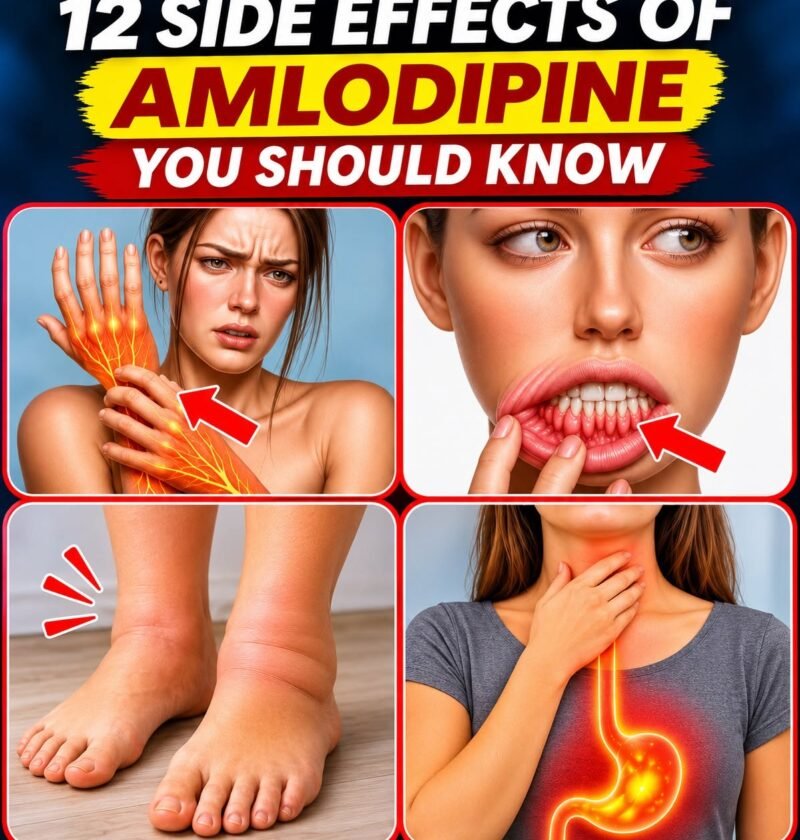
Peripheral Edema (Swelling): Swelling in the lower legs, ankles, and feet is one of the most frequent complaints. It occurs because fluid shifts into the tissues due to changes in blood vessel pressure.
-
Dizziness or Lightheadedness: Especially when standing up too quickly, as your blood pressure adjusts.
-
Flushing: A sudden feeling of warmth or redness in the face, neck, or chest.
-
Heart Palpitations: A sensation that your heart is pounding, racing, or fluttering. (Interestingly, clinical data notes that women report palpitations and flushing more frequently than men).
-
Fatigue and Sleepiness: Feeling unusually tired, weak, or drowsy during the day.
-
Nausea and Stomach Pain: Mild queasiness, indigestion, or general abdominal discomfort.
-
Headaches: Resulting from the initial widening of blood vessels in the head.
-
Gum Changes (Long-Term): Over several months, some individuals experience tender, swollen, or overgrown gums (gingival hyperplasia).
Serious Warning Signs (When to Get Help)
While less common, certain reactions are dangerous and require prompt medical evaluation or emergency care:
-
Worsening Chest Pain or Heart Attack: In rare cases—particularly for people with severe coronary artery disease—starting amlodipine or increasing the dose can paradoxically trigger or worsen chest pain (angina) or provoke a heart attack. Seek emergency care for crushing chest pain, shortness of breath, or pain radiating to the jaw or arm.
-
Severe Low Blood Pressure (Hypotension): If your blood pressure drops dangerously low, you may experience fainting (syncope), severe confusion, blurred vision, or cold, clammy skin.
-
Liver Problems (Hepatotoxicity): Though rare, liver injury can occur. Watch for yellowing of the skin or eyes (jaundice), dark urine, pale stools, and persistent upper-right-side abdominal pain.
-
Severe Allergic Reactions (Anaphylaxis or Angioedema): Sudden swelling of the face, lips, tongue, or throat, alongside trouble breathing, wheezing, or widespread hives, is a life-threatening medical emergency requiring immediate 911 calls.
Safe Practices & Next Steps
-
Do not stop taking amlodipine abruptly: Stopping blood pressure medication suddenly can cause a dangerous rebound effect, causing your blood pressure to spike or chest pain to worsen.
-
Talk to your doctor: If common side effects like ankle swelling or mild dizziness persist and bother you, consult your healthcare provider. They can evaluate whether a dose adjustment or a different medication is appropriate.