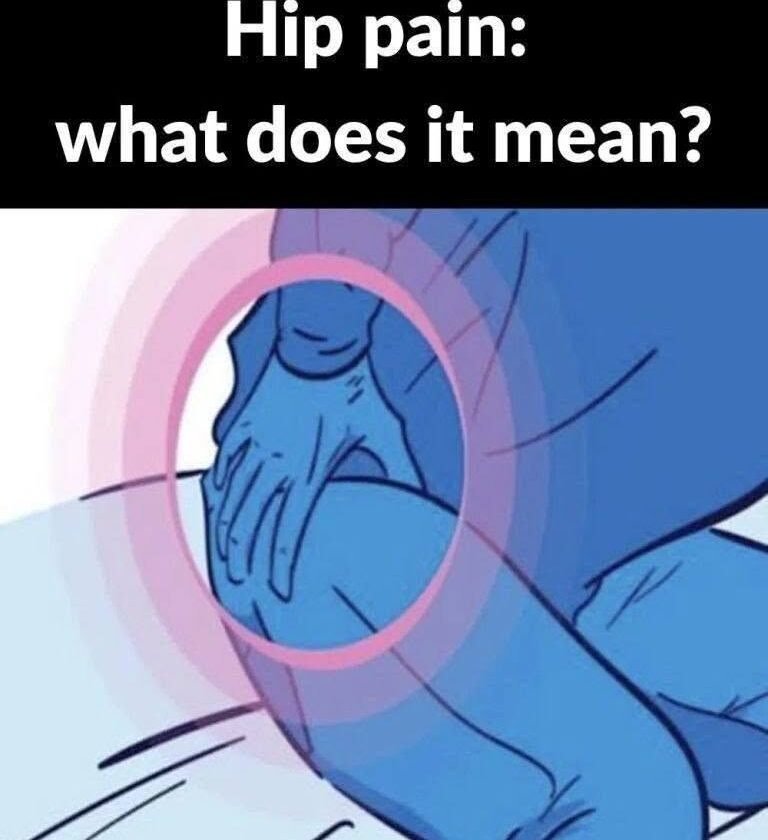
Hip pain is a common yet complex symptom because the hip joint itself is a major weight-bearing ball-and-socket structure, but pain in the “hip” region can also originate from nearby structures like the lower back, pelvis, or surrounding tendons and bursa.
Because your hips support your entire upper body weight and enable mobility, understanding where the pain is located and what triggers it is the first step toward finding relief.
1. True Hip Joint Pain (Groin and Deep Front Pain)
When the issue is inside the actual ball-and-socket hip joint, pain is rarely felt on the outer hip or side of the buttock. Instead, it typically manifests in the groin crease, deep in the front of the hip, or radiating down the thigh toward the knee.
-
Osteoarthritis (Wear-and-Tear Arthritis): The breakdown of cartilage cushioning the hip socket. It causes a dull, stiff ache—especially after resting (like getting out of bed or a chair)—that worsens with walking or prolonged activity.
-
Hip Labral Tear: A tear in the ring of cartilage (the labrum) that cushions the socket rim. It often causes a clicking, catching, or locking sensation in the joint, accompanied by sharp pain with twisting or deep bending.
-
Femoroacetabular Impingement (FAI): Abnormal bone shape around the hip socket causing friction during movement, leading to stiffness and groin discomfort.
2. Outer Hip Pain (Lateral Hip and Buttock Pain)
Pain on the outer side of your hip, over the bony bump you feel on your outer thigh, or deep in the gluteal region usually involves soft tissues rather than the joint itself:
-
Trochanteric Bursitis: Inflammation of the bursa (a fluid-filled sac that cushions tendons over the bone). This causes a sharp or aching pain directly on the outer hip that often flares up when lying on that side at night, walking upstairs, or getting up from a chair.
-
Tendinopathy / Gluteal Tendon Tears: Overuse or degeneration of the tendons connecting your gluteal muscles to your hip bone, causing persistent outer thigh pain.
-
Sciatica / Referred Back Pain: A pinched nerve in the lower lumbar spine can send radiating, burning, or shooting pain down through the buttock, outer hip, and leg (often mimicking hip joint problems).
3. Acute Traumatic Hip Pain
-
Hip Fractures: In older adults—particularly those with osteoporosis—a fall can cause a hip fracture. This results in severe, sudden pain, an inability to bear weight on the leg, and sometimes a visibly shortened or rotated leg.
-
Muscle Strains (Hip Flexor or Groin Pulls): Common in runners, athletes, or from sudden awkward movements, causing sharp localized pain when lifting the knee or changing direction.
Red Flag Symptoms: When to See a Doctor Immediately
While minor hip stiffness can often be managed with rest and gentle stretching, certain signs require urgent medical evaluation:
-
Inability to bear weight on the leg or stand after a fall or injury.
-
Sudden, severe pain accompanied by a deformed appearance of the leg or hip.
-
Signs of infection: A hot, red, swollen hip joint accompanied by an unexplained fever or chills.
-
Numbness, tingling, or sudden weakness shooting down the leg into the foot.