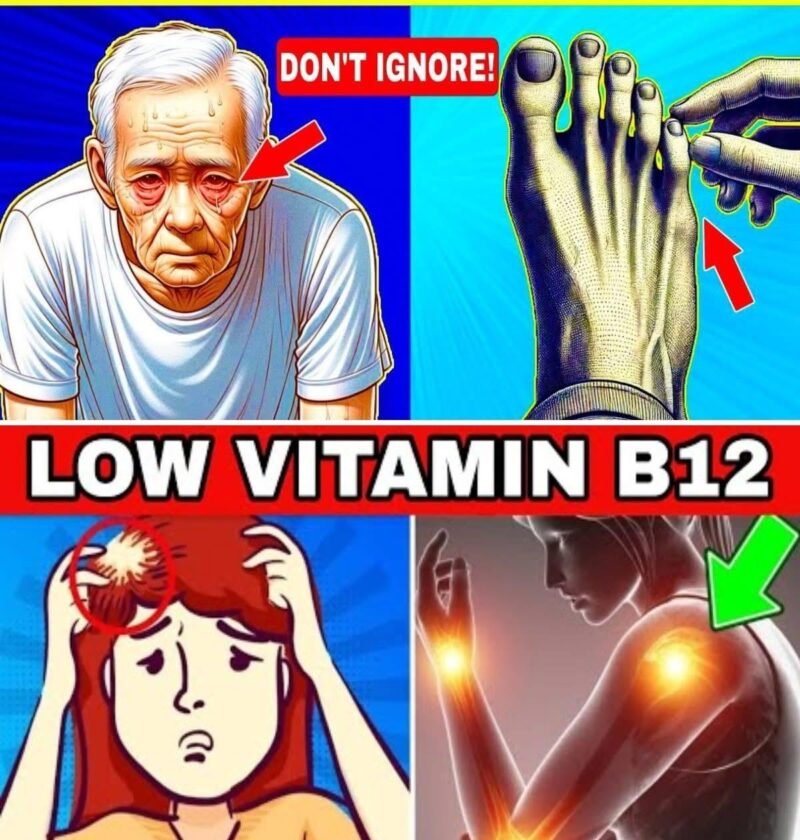
Vitamin B12 (cobalamin) is an essential nutrient that your body cannot manufacture on its own. It plays a critical role in producing red blood cells, maintaining optimal nerve function, synthesizing DNA, and keeping your brain and energy metabolism running smoothly.
Because B12 is stored in the liver, a deficiency can take months or even years to develop, meaning symptoms often creep up so gradually that people mistake them for normal aging, stress, or everyday fatigue.
Here are 9 hidden signs that your body is crying out for more Vitamin B12:
1. Unexplained, Persistent Fatigue and Lethargy
-
Why it happens: Without enough B12, your body struggles to produce healthy red blood cells capable of carrying adequate oxygen to your tissues (a condition called megaloblastic anemia). When your cells are starved of oxygen, your energy levels plummet, leaving you bone-tired even after a full night’s sleep.
-
The subtle sign: Feeling like you need an afternoon nap every single day, or struggling to get through basic morning tasks without heavy exhaustion.
2. Strange Tingling, Numbness, or “Pins and Needles”
-
Why it happens: Vitamin B12 is essential for maintaining the protective myelin sheath that insulates your nerves. A chronic shortage leads to nerve damage and demyelination, particularly in the peripheral nerves of the hands and feet.
-
The subtle sign: Frequent, unprovoked sensations of “pins and needles,” numbness in your toes, or a mild burning feeling in your lower legs that isn’t caused by sitting awkwardly.
3. Brain Fog, Memory Lapses, and Confusion
-
Why it happens: Because B12 supports neurological health and neurotransmitter function, low levels directly impact cognitive speed, focus, and short-term memory.
-
The subtle sign: Finding yourself frequently forgetting why you walked into a room, struggling to recall common words mid-sentence, or feeling mentally sluggish and uncoordinated.
4. A Smooth, Sore, or “Beefy Red” Tongue (Glossitis)
-
Why it happens: Rapidly dividing cells—like those lining your mouth and tongue—are heavily impacted by low B12. The tiny papillae (bumps) on your tongue can atrophy or wear down, leaving the tongue looking unnaturally smooth, shiny, or inflamed.
-
The subtle sign: A burning sensation at the tip or edges of your tongue, or a tongue that looks unusually red, swollen, or sore when you brush your teeth.
5. Pale or Jaundiced (Slightly Yellowish) Skin
-
Why it happens: When red blood cells break down prematurely due to a lack of B12, they release excess bilirubin into the system, which can impart a mild yellow hue to the skin and the whites of the eyes. Concurrently, reduced hemoglobin causes paleness.
-
The subtle sign: Looking in the mirror and noticing your skin has taken on an uncharacteristically pale or washed-out yellow tint, often mistaken for a mild tan fading or simple winter sallowness.
6. Unsteadiness, Balance Issues, and Clumsiness
-
Why it happens: Severe or prolonged B12 deficiency can affect proprioception—your body’s ability to sense where it is in space—by damaging the nerve pathways in the spinal cord.
-
The subtle sign: Finding yourself bumping into doorframes more often, tripping over your own feet, or feeling unexpectedly uncoordinated when walking in the dark.
7. Mood Changes, Irritability, or Low Spirits
-
Why it happens: B12 is intimately involved in the synthesis of mood-regulating neurotransmitters like serotonin and dopamine. Low levels can disrupt emotional regulation and nervous system stability.
-
The subtle sign: Unexplained mood swings, a shorter fuse than usual, or a persistent sense of mild anxiety, apathy, or low spirits that seems to have no external trigger.
8. Heart Palpitations and Shortness of Breath on Exertion
-
Why it happens: To compensate for a low red blood cell count, your heart must pump faster and harder to circulate enough oxygenated blood throughout your body.
-
The subtle sign: Noticing your heart racing or pounding in your chest while doing light physical activity, such as walking up a single flight of stairs or carrying groceries.
9. Vision Blurring or Disturbance
-
Why it happens: In rare and advanced cases, a B12 deficiency can damage the optic nerve or impair blood vessels leading to the retina, causing visual disturbances.
-
The subtle sign: Blurry or disturbed vision that cannot be corrected with new glasses or eye strain relief (though always get sudden vision changes evaluated immediately).
Why B12 Deficiencies Happen (And Who Is Most at Risk)
Even if you eat a healthy diet, your body might struggle to absorb B12. Common risk factors include:
-
Age: Stomach acid production naturally declines with age, and stomach acid is required to unlock B12 from food. Adults over 50 are significantly more vulnerable.
-
Medications: Long-term use of acid-reducing drugs (like proton pump inhibitors or H2 blockers) and certain diabetes medications (like metformin) inhibit B12 absorption.
-
Dietary Choices: Because B12 is found almost exclusively in animal products (meat, fish, eggs, dairy), strict vegans and vegetarians are at higher risk unless they consume fortified foods or take supplements.
How to Check and Correct Your Levels
If you suspect a deficiency, ask your doctor for a simple blood panel measuring serum Vitamin B12, as well as methylmalonic acid (MMA) and homocysteine (markers that reveal whether your body is actually utilizing B12 at a cellular level). Depending on the results, deficiencies are easily managed with dietary adjustments, high-potency oral supplements, or, in cases of severe malabsorption, prescribed B12 injections.