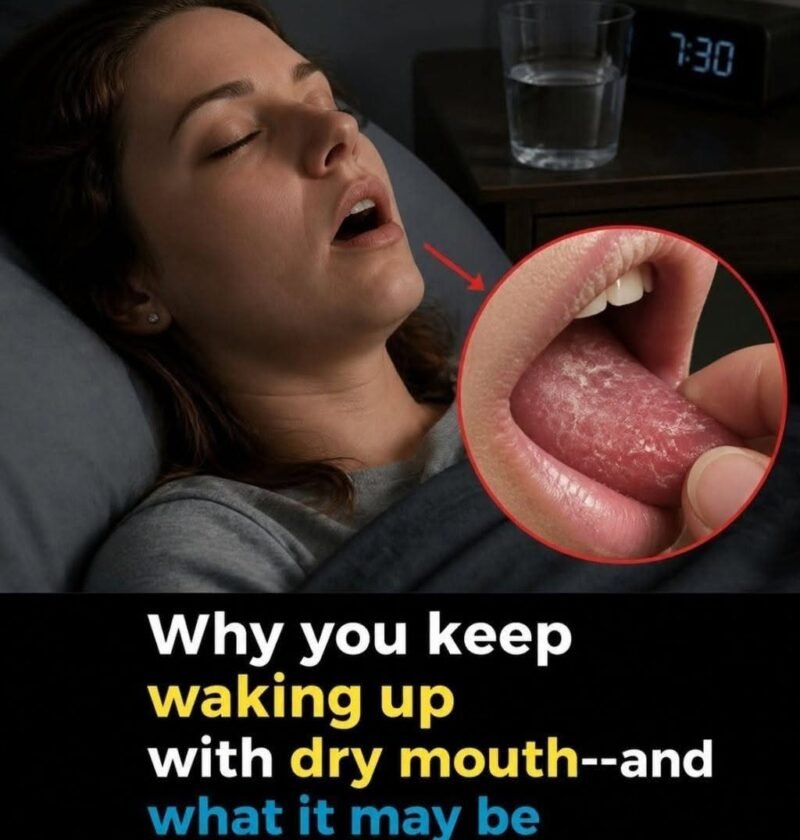
Waking up with a dry mouth is common and doesn’t necessarily mean something is wrong. It simply means your mouth isn’t producing enough saliva during the night—or you’re losing moisture while sleeping.
Common reasons
-
Mouth breathing: A blocked nose, allergies, or sleeping with your mouth open can dry the mouth.
-
Dehydration: Not drinking enough fluids during the day can contribute.
-
Medications: Many medicines can reduce saliva, including some antihistamines, antidepressants, decongestants, and blood-pressure medicines.
-
Snoring or sleep apnea: Persistent dry mouth on waking, especially with loud snoring, gasping, morning headaches, or daytime sleepiness, can be a reason to discuss sleep apnea with a doctor.
-
Alcohol or tobacco: These can worsen dryness.
-
High blood sugar: Excessive thirst and frequent urination alongside persistent dry mouth can sometimes occur with diabetes.
What you can try
Drink enough water during the day, address nasal congestion if present, avoid excessive alcohol/tobacco, and consider a humidifier if your bedroom air is very dry. Good oral hygiene is particularly important because reduced saliva increases the risk of tooth decay and gum problems.
If your dry mouth is persistent, severe, or accompanied by excessive thirst/urination, difficulty swallowing, mouth sores, or significant snoring/gasping, it’s worth getting evaluated rather than assuming it’s simply dehydration.