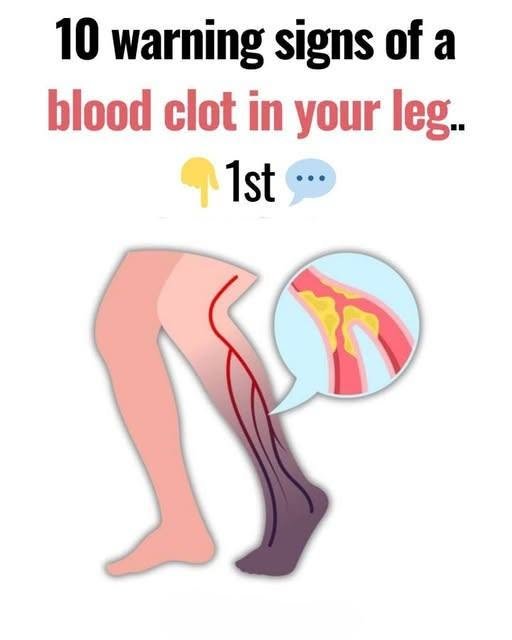
10 warning signs of a blood clot in the leg
A blood clot in a deep vein is called deep vein thrombosis (DVT). It can be dangerous because part of the clot can travel to the lungs and cause a pulmonary embolism (PE). Importantly, about half of DVTs cause no symptoms, so symptoms alone cannot rule one out. CDC+1
Possible warning signs include:
- Swelling in one leg, particularly if it appears suddenly.
- Pain or tenderness in the calf or thigh without an obvious injury.
- Cramping or throbbing pain, often in the calf.
- A feeling of heaviness or aching in the affected leg.
- Warmth over part of the leg.
- Red, blue, purple, or darkened skin around the painful area.
- Swollen or more prominent veins in the affected leg.
- Symptoms that are noticeably worse on one side rather than affecting both legs.
- Unexplained lower-abdominal/pelvic pain can occasionally occur with a clot in pelvic veins, although this is uncommon. nhs.uk+1
- Sudden breathing difficulty, chest pain, coughing up blood, rapid heartbeat, dizziness or fainting can indicate that a clot has traveled to the lungs. These are symptoms of PE rather than simply a leg clot and require emergency medical attention. CDC+1
🚨 Don’t try to diagnose it at home
A muscle injury, infection, or inflammation of a superficial vein can look similar to DVT. Doctors generally need testing—often a leg ultrasound—to determine whether a DVT is actually present. CDC+1
If you currently have new swelling and pain in one leg, seek urgent medical assessment rather than waiting for it to go away. If you have chest pain or sudden shortness of breath, seek emergency care immediately.
Age over 60 is one factor that increases DVT risk, as are recent surgery or hospitalization, prolonged immobility, cancer, previous DVT, and long journeys. nhs.uk
Sources