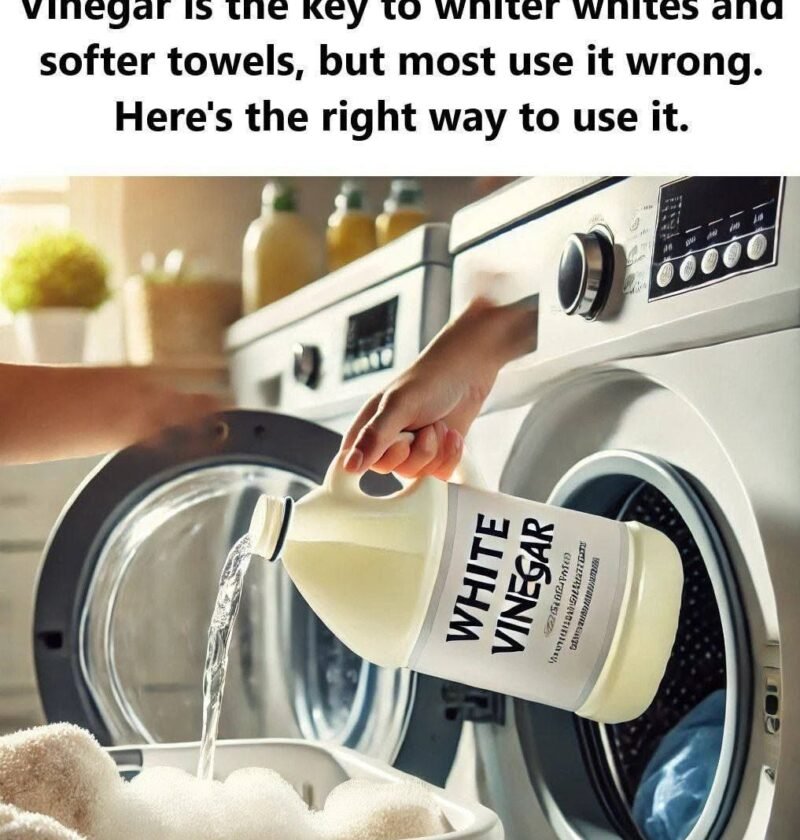
Vinegar: The Key to Whiter Whites and Softer Towels — But Most People Use It Wrong
White vinegar can be useful in the laundry room, but it isn’t a miracle bleach or fabric softener. Its main benefit is helping reduce detergent residue and mineral buildup, which can make towels feel stiff.
🧺 The right way to use it
1. Use plain white distilled vinegar.
Avoid flavored, colored, or cleaning products that contain additional ingredients.
2. Put it in the fabric-softener compartment.
For a typical household load, about ½ cup (120 mL) of white vinegar is commonly used in the rinse cycle. Follow your washing machine’s instructions and don’t overfill the dispenser.
3. Don’t pour vinegar directly onto dry clothes.
Using the dispenser allows it to be released during the rinse rather than sitting concentrated on fabrics.
4. Skip conventional fabric softener when using vinegar.
Combining the two isn’t necessary, and fabric softeners can reduce towel absorbency.
5. Wash towels normally.
Use the detergent and water temperature appropriate for the fabric and care label. Vinegar works as an addition to the rinse—not a replacement for detergent.
⚠️ One important warning
Never mix vinegar with chlorine bleach. The combination can produce irritating and potentially dangerous chlorine gas.
Also, vinegar isn’t necessarily the best choice for every washing machine or material. Some appliance manufacturers specifically advise against putting vinegar in their machines because repeated exposure to acid may damage certain rubber components.
And what about “whiter whites”?
Vinegar can help remove some residues and odors, which may make laundry look or feel fresher, but it isn’t a substitute for chlorine or oxygen bleach when you’re specifically trying to whiten heavily stained white clothing.