If this is the first part of a health post, the safest detailed version is:
If you think you’re having a heart attack at home
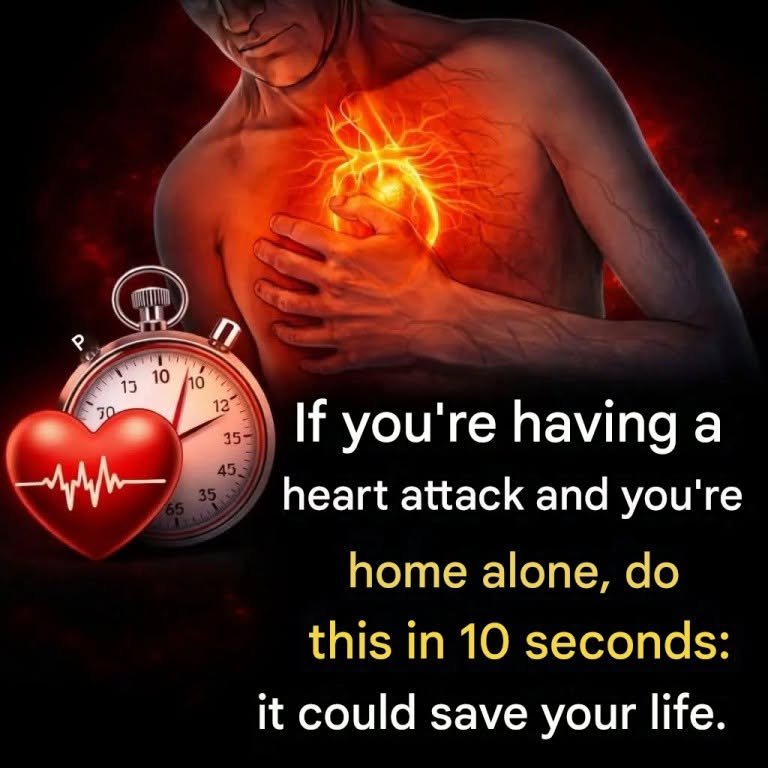
There is no 10-second trick that can stop a heart attack. The action that matters most is getting emergency medical help as quickly as possible.
-
Call emergency services immediately. If you’re in Pakistan, Rescue 1122 operates in areas where the service is available.
-
Stop what you’re doing and sit or lie down somewhere safe while waiting for help.
-
Do not drive yourself to the hospital. If possible, have someone stay with you and unlock the door for responders.
-
If you have been prescribed nitroglycerin for angina, take it exactly as previously instructed.
-
Aspirin is sometimes recommended for suspected heart attack, but it isn’t appropriate for everyone. Follow the emergency operator’s or medical professional’s instructions, particularly if you have an aspirin allergy, active bleeding, or have been told to avoid it.
-
If the person becomes unconscious and isn’t breathing normally, someone should begin CPR and use an AED if one is available.
Possible symptoms include chest pressure or squeezing, pain spreading to the arm, back, neck or jaw, shortness of breath, sweating, nausea, or sudden weakness. Don’t wait for symptoms to become severe before seeking help.
If this is about symptoms happening right now, call emergency services rather than continuing to read.