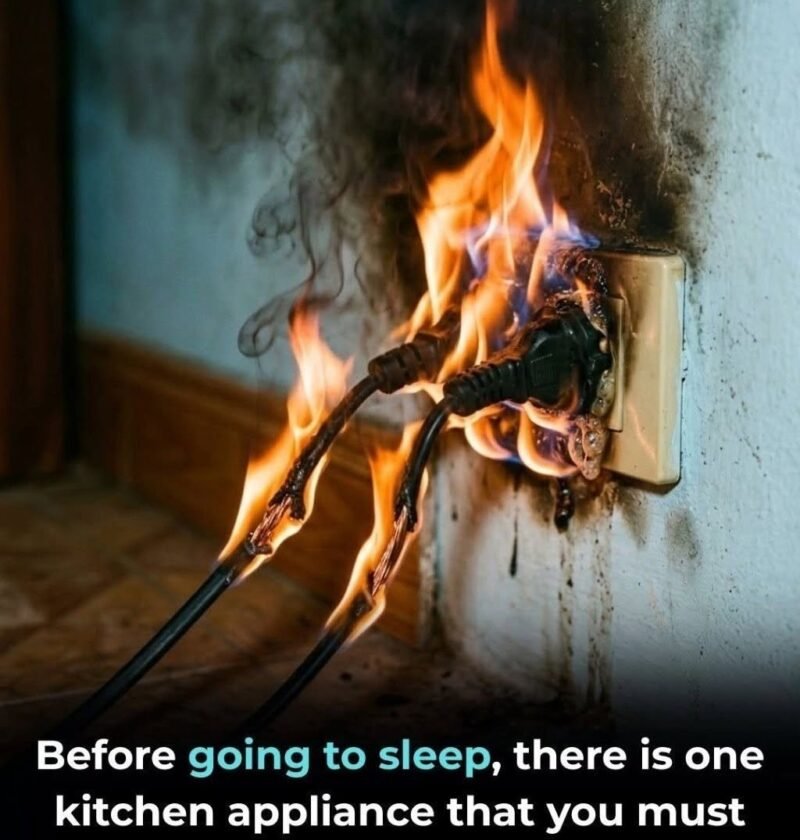
🔥 The Kitchen Appliance You Should Unplug at Night
There isn’t one universally dangerous kitchen appliance that everyone must unplug every night. The bigger issue is appliances that generate heat, have heating elements, or are damaged/poorly maintained.
If you’re looking for the appliance most commonly singled out in fire-safety advice, it’s the toaster.
🍞 Why unplug a toaster?
Toasters contain heating elements that become extremely hot. Crumbs and food debris can accumulate inside, and a malfunctioning appliance or electrical fault can create a fire hazard. Unplugging it when it’s not being used removes the electrical power source.
The U.S. Fire Administration recommends unplugging appliances when they’re not in use and specifically advises keeping things that can burn away from heat-producing appliances. (usfa.fema.gov)
Other appliances worth paying attention to
The same principle applies to appliances such as:
- Toaster ovens
- Electric kettles
- Countertop grills
- Air fryers
- Coffee makers
- Slow cookers
- Portable cooking appliances
You don’t necessarily have to unplug every one after every use. Follow the manufacturer’s instructions and pay particular attention to appliances that produce heat.
⚠️ Don’t ignore these warning signs
Stop using an appliance if you notice:
- Frayed or damaged cords
- Sparks or arcing
- A burning or unusual electrical smell
- Melted or discolored plugs
- Repeated tripped breakers
- Excessive heating
- Damage to the appliance or outlet
Never operate an appliance with a damaged power cord.
🏠 A few simple nighttime habits
Before going to bed, make sure stovetops and ovens are switched off, cooking appliances are no longer operating, and combustible items such as towels, paper, and curtains are kept away from heat sources. Working smoke alarms on every level of the home are also essential. (usfa.fema.gov)
Bottom line: If you want one simple rule, unplug your toaster after use, especially if the manufacturer recommends it. But don’t let that distract from the bigger fire-safety priorities: never leave cooking unattended, maintain appliances and cords, keep combustibles away from heat, and have functioning smoke alarms.