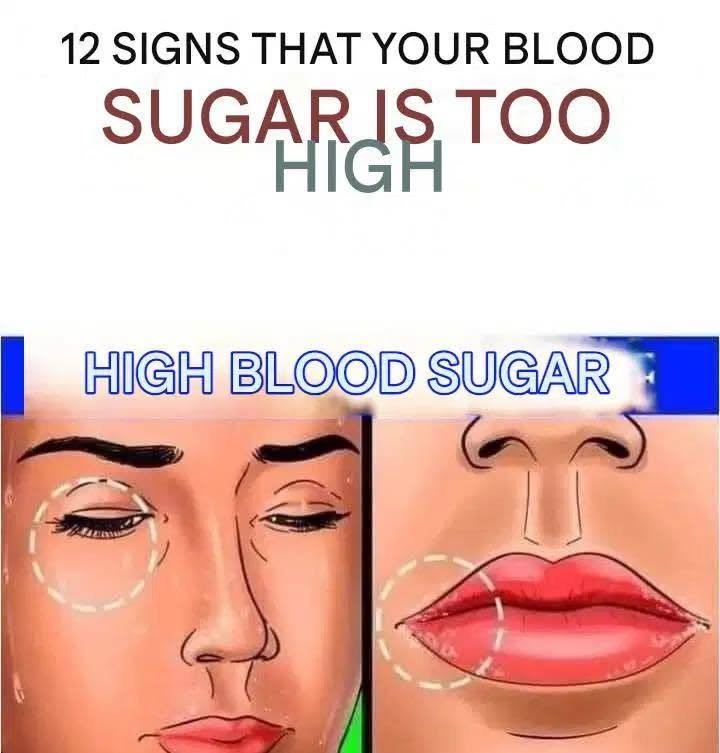
12 signs that can occur with high blood sugar
The headline “The High-Sugar Alert” is a little dramatic. High blood glucose (hyperglycemia) can cause noticeable symptoms, but some people—especially with gradually developing type 2 diabetes—may have few or no symptoms for a long time.
Twelve possible signs are:
-
Increased thirst
-
Frequent urination, especially at night
-
Increased hunger
-
Unexplained weight loss
-
Fatigue or unusual weakness
-
Blurred vision
-
Slow-healing cuts or wounds
-
Frequent infections, including skin, urinary, or genital infections
-
Dry or itchy skin
-
Tingling or numbness in the hands or feet
-
Headaches
-
Difficulty concentrating or feeling mentally foggy
These symptoms aren’t specific to high blood sugar, so a blood test is needed to determine whether glucose is actually elevated.
🩸 When to get tested
Common tests include:
-
Fasting blood glucose
-
HbA1c, which estimates average blood glucose over roughly the previous 2–3 months
-
Sometimes an oral glucose tolerance test
If you repeatedly have excessive thirst and urination, unexplained weight loss, or persistent fatigue, it’s worth discussing diabetes testing with a healthcare professional.
🚨 Very high blood sugar can be an emergency
Seek urgent medical care if high blood sugar is accompanied by vomiting, severe dehydration, abdominal pain, rapid/deep breathing, fruity-smelling breath, severe drowsiness, or confusion. These can occur with dangerous metabolic complications such as diabetic ketoacidosis.
Don’t diagnose diabetes from symptoms alone—and don’t start or change diabetes medication based solely on a home reading or social-media checklist.