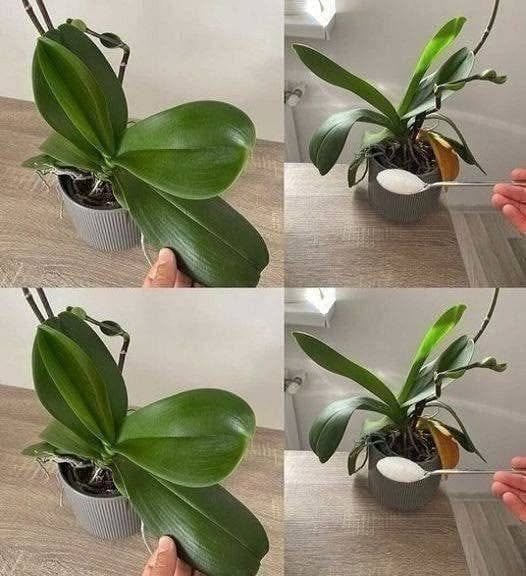
🌱 How to fertilize an orchid properly
- Use an orchid fertilizer or a balanced, water-soluble fertilizer suitable for orchids.
- Follow the product’s dilution instructions rather than assuming “more is better.”
- Fertilize primarily when the orchid is actively growing.
- Water the orchid first, then fertilize with the diluted solution. This reduces the chance of fertilizer salts damaging dry roots.
- Occasionally flush the pot thoroughly with plain water to help remove accumulated fertilizer salts.
- Reduce or pause feeding when the plant is dormant or not actively growing, according to its species and growing conditions.
🌸 Will fertilizer make it bloom?
Fertilizer supplies nutrients needed for healthy leaves, roots and flower production, but it isn’t a magic flowering trigger. For many common Phalaenopsis orchids, adequate light and appropriate temperature changes are particularly important for initiating flower spikes.
If an orchid has dark green leaves but refuses to flower, insufficient light is often a more likely problem than a lack of fertilizer.
⚠️ Don’t fall for “miracle” recipes
Avoid routinely adding baking soda, vinegar, sugar, milk, or other kitchen ingredients to orchid pots. They don’t provide a reliable substitute for properly formulated fertilizer and may damage the roots or alter the growing medium.
Think “weak and regular,” not “strong and occasional.” A small, properly diluted dose can support healthy growth without exposing the orchid to the root damage that excessive fertilizer can cause.