How to Pick a Sweet, Ripe Watermelon 🍉
You can’t know a watermelon’s exact sweetness just by looking at it, but several visual and physical clues can help you choose a good one:
- Look for a large creamy-yellow field spot. This is where the melon rested on the ground. A yellow or golden spot generally indicates it had time to ripen on the vine; a very pale or white spot can be a less useful sign.
- Choose a melon that feels heavy for its size. More weight generally means more water content and juiciness.
- Look for a dull rather than shiny rind. A slightly matte appearance can be a useful maturity clue.
- Check the shape. A symmetrical, evenly developed melon is usually preferable to one with pronounced irregularities or soft, damaged areas.
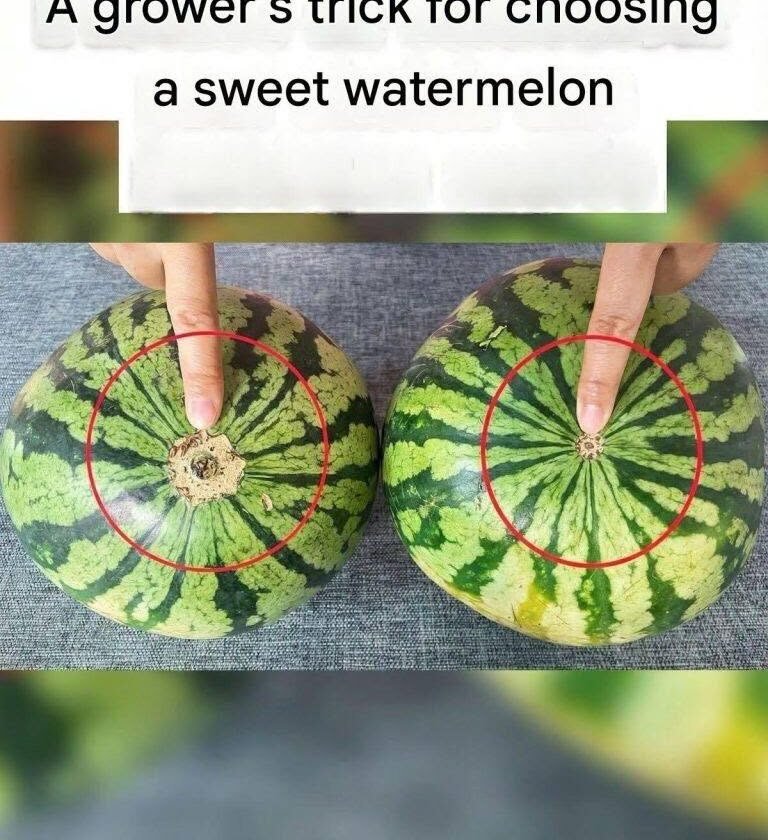
- Look for dry, brownish stem material if the stem is still attached. A green stem can indicate the fruit was harvested relatively early, although stem appearance isn’t a guarantee of sweetness.
- Avoid bruises, cuts, soft spots, or leaking areas, which can indicate damage or deterioration.
- Don’t rely on tapping alone. The popular “deep hollow sound” test is subjective and isn’t a reliable way to measure sweetness.
The biggest takeaway
Heavy for its size + a creamy/golden field spot + an intact, undamaged rind is a better combination of clues than any single “secret” trick.
And remember: these signs can suggest ripeness and quality, but they can’t guarantee that a watermelon will be exceptionally sweet.