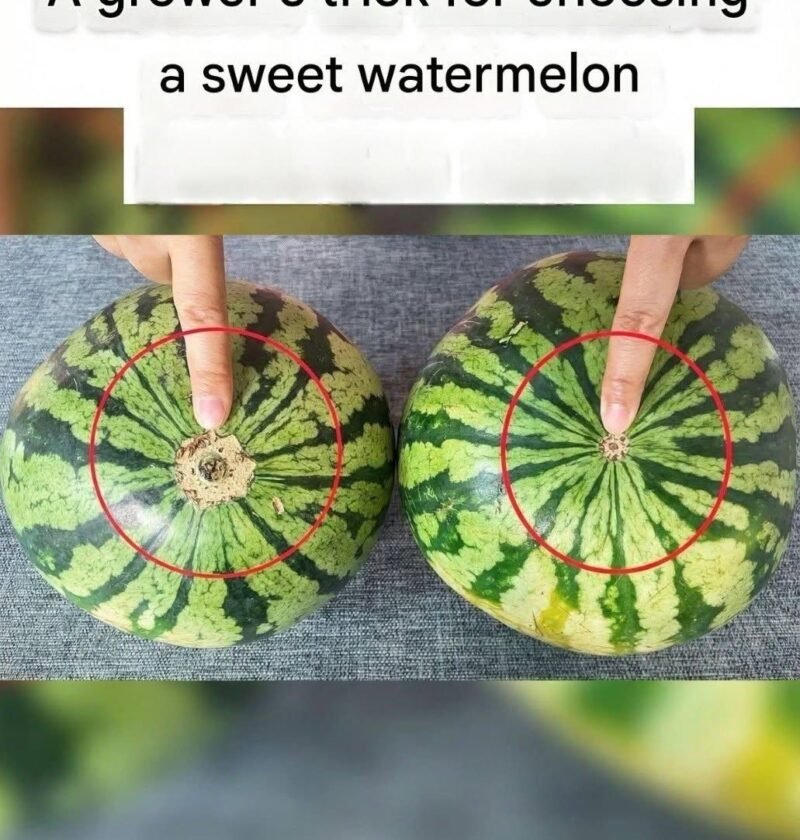
How to Pick a Sweet, Ripe Watermelon 🍉
There isn’t a 100% foolproof visual test for sweetness, but several external clues can improve your odds of getting a flavorful, ripe watermelon.
👀 Look for these signs
1. A large creamy-yellow field spot
Turn the watermelon over and look for the patch where it rested on the ground. A creamy yellow or orange-yellow spot generally indicates that it had time to ripen on the vine. A very pale white spot can suggest less ripeness.
2. Brown “webbing” or sugar spots
Some melons have rough, brown, web-like markings. These can be associated with pollination and aren’t necessarily defects. They don’t guarantee sweetness, however.
3. Dull rather than shiny skin
A mature watermelon often has a somewhat dull, less glossy appearance. Very shiny skin can be associated with an underripe fruit, although this isn’t a reliable test by itself.
4. A dry stem
If the stem is still attached, a brown, dry-looking stem can indicate maturity. A green stem may mean it was harvested relatively early—but stem appearance alone isn’t definitive.
5. Heavy for its size
Pick up several similarly sized melons. The one that feels heaviest for its size is likely to contain more water and be well hydrated.
🔊 Should you tap it?
The familiar “hollow sound” test can be useful as a rough comparison between melons, but it isn’t a scientifically reliable way to determine sugar content. Don’t reject a good-looking watermelon solely because it doesn’t sound a certain way.
🍉 One important limitation
You cannot reliably determine sweetness from the outside alone. Sugar content varies with variety, growing conditions, maturity and harvesting. The best strategy is to combine several clues rather than trusting a single “secret” sign.
Quick checklist:
🟡 Large creamy-yellow field spot
⚖️ Heavy for its size
🟤 Dry stem
👀 Dull, healthy-looking rind
🔊 Compare the sound with other melons
Bottom line: Choose a watermelon that is heavy for its size with a substantial creamy-yellow field spot. That’s a much better strategy than relying on a viral “sure-fire” trick.