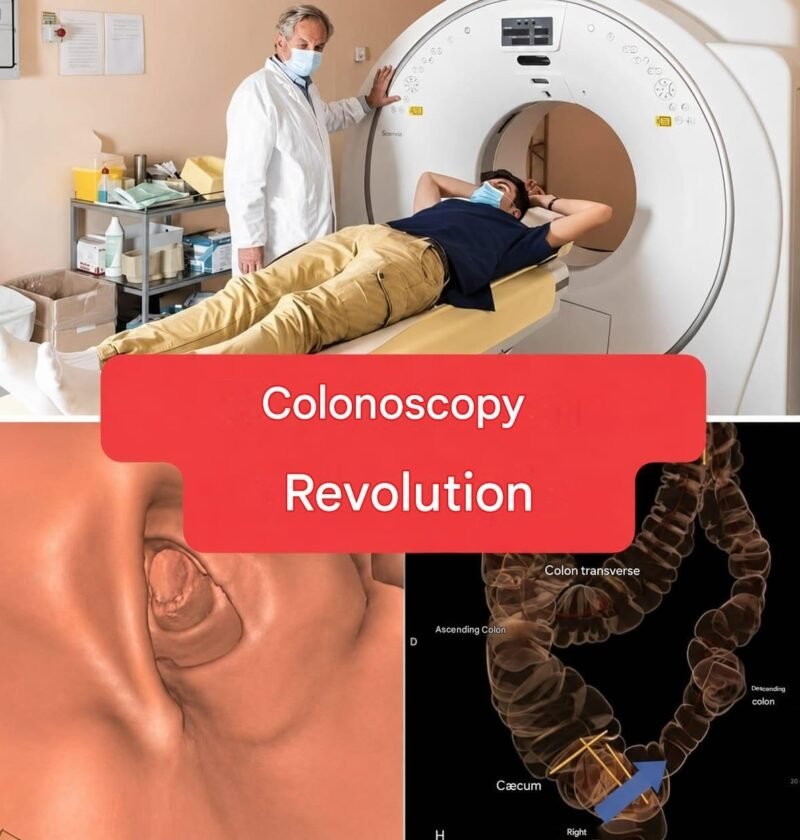
That headline is likely referring to newer colorectal-cancer screening methods, but it doesn’t mean colonoscopy itself has suddenly become completely non-invasive.
What could replace some colonoscopies?
Several less-invasive screening options exist or are being developed:
-
Stool tests: Tests such as FIT look for hidden blood in stool. Some newer stool tests also look for abnormal DNA associated with colorectal cancer.
-
Blood-based tests: Blood tests for colorectal-cancer biomarkers are an emerging screening option in some countries. They’re convenient, but they don’t provide the same examination of the colon as a colonoscopy.
-
CT colonography (“virtual colonoscopy”): Uses CT imaging rather than inserting a traditional colonoscope through the entire colon. It still requires bowel preparation, and an abnormal result generally requires a conventional colonoscopy.
-
Capsule endoscopy: A person swallows a small camera capsule that travels through the digestive tract. It can visualize portions of the bowel, but it doesn’t currently replace standard colonoscopy for every screening or diagnostic situation.
Why colonoscopy is still important
A conventional colonoscopy allows a clinician to directly examine the colon and remove polyps during the same procedure. That’s a major advantage that many non-invasive tests don’t have.
So the accurate takeaway is: colorectal screening is becoming less invasive, but colonoscopy hasn’t become obsolete. The best screening method depends on age, risk factors, symptoms, previous test results, and local medical guidelines.
If the “new method” you’re referring to is from the second half of the article, send part 2/2 and I can explain exactly what technology it’s talking about.