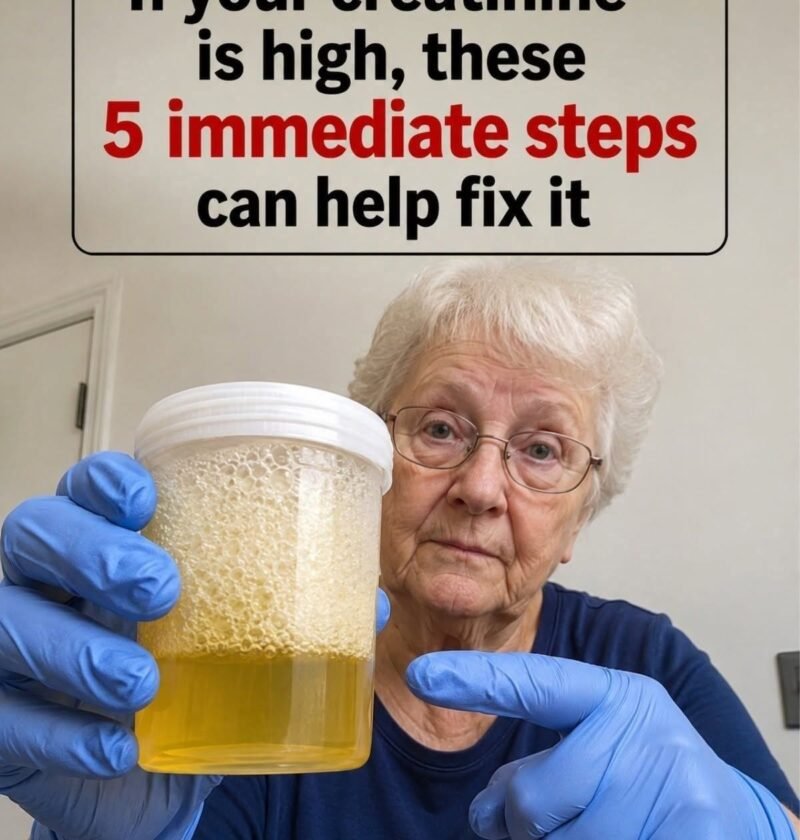
If you’re asking about the headline “If your creatinine is high, these 5 immediate steps can help fix it,” there is an important correction: high creatinine is a finding, not a disease, and there is no universal 5-step method that immediately “fixes” it. What matters is finding out why it is elevated.
What you should do if creatinine is high
1. Find out your eGFR and compare with previous results.
Creatinine is used to estimate kidney filtration (eGFR). One abnormal result does not necessarily mean permanent kidney disease. Dehydration, intense exercise, high muscle mass, cooked meat, creatine supplements and certain medicines can affect creatinine/eGFR.
2. Check for dehydration—but don’t force excessive water.
Dehydration can cause or worsen acute kidney injury. If you’ve been losing fluids through vomiting or diarrhea, maintaining appropriate hydration is important. However, people with some heart or kidney conditions may actually need a fluid restriction, so don’t dramatically increase water intake without medical advice.
3. Review your medicines with a doctor or pharmacist.
Some medicines can affect kidney function. NSAID painkillers such as ibuprofen, naproxen and diclofenac are particularly important because they can worsen acute kidney injury in some circumstances.
Don’t stop prescribed medicines on your own—ask a healthcare professional which medicines should be continued, adjusted or temporarily withheld.
4. Look for the underlying cause.
A sudden rise can result from dehydration, infection, certain medications, low blood pressure, or a blockage in the urinary tract. Chronic kidney disease can also cause persistently elevated creatinine. Treatment depends on the cause.
5. Repeat testing when your clinician recommends it.
Depending on how high the creatinine is and whether it has changed rapidly, you may need repeat blood tests, urine testing, blood-pressure measurement, medication review, or imaging. Acute kidney injury can sometimes recover substantially when its cause is treated.