Why “One Teaspoon” Remedies Do Not Work
-
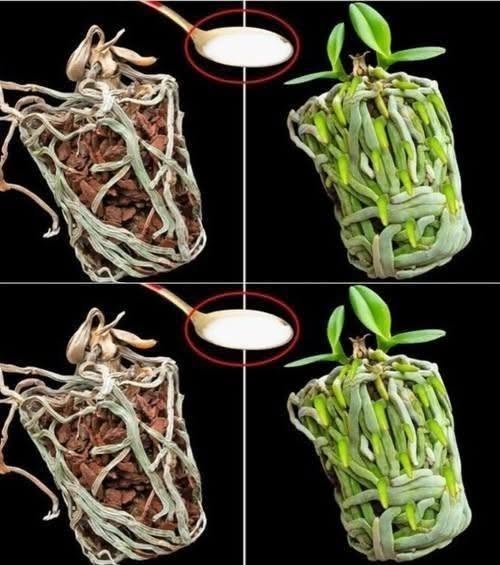
Sugar, honey, or milk: Sugars and proteins coat the sponge-like root covering (), encouraging mold, bacteria, and fungal growth while drawing moisture out of stressed root tips.
-
Cinnamon: Acts as a mild surface drying agent rather than a growth stimulant; applying it across dry roots or inside the leaf crown can desiccate healthy tissue or trap moisture.
-
Vinegar or baking soda: Sudden shifts in pH or salt concentration can burn delicate emerging root tips and leave harmful mineral buildup in the potting medium.
How to Actually Revive a Dried-Out Orchid
-
Inspect and trim dead roots: Healthy roots feel firm and turn green when wet and silvery-gray when dry. Cut away mushy, hollow, or papery-dry roots using sterilized scissors or shears.
-
Rehydrate thoroughly without waterlogging: Soak the pot (filled with chunky orchid bark or loose sphagnum moss) in room-temperature water for 15–20 minutes, then let all excess water drain completely so oxygen reaches the roots.
-
Provide bright, indirect light: Place the orchid near an east- or south-facing window filtered by a sheer curtain. Strong indirect light drives the photosynthesis needed to produce new roots and leaves, while harsh direct sun scorches foliage.
-
Fertilize lightly only after growth resumes: Once you see active green root tips or a new leaf emerging, feed with a balanced orchid fertilizer diluted to one-quarter or one-half strength, flushing the pot with plain water once a month to clear mineral salts.