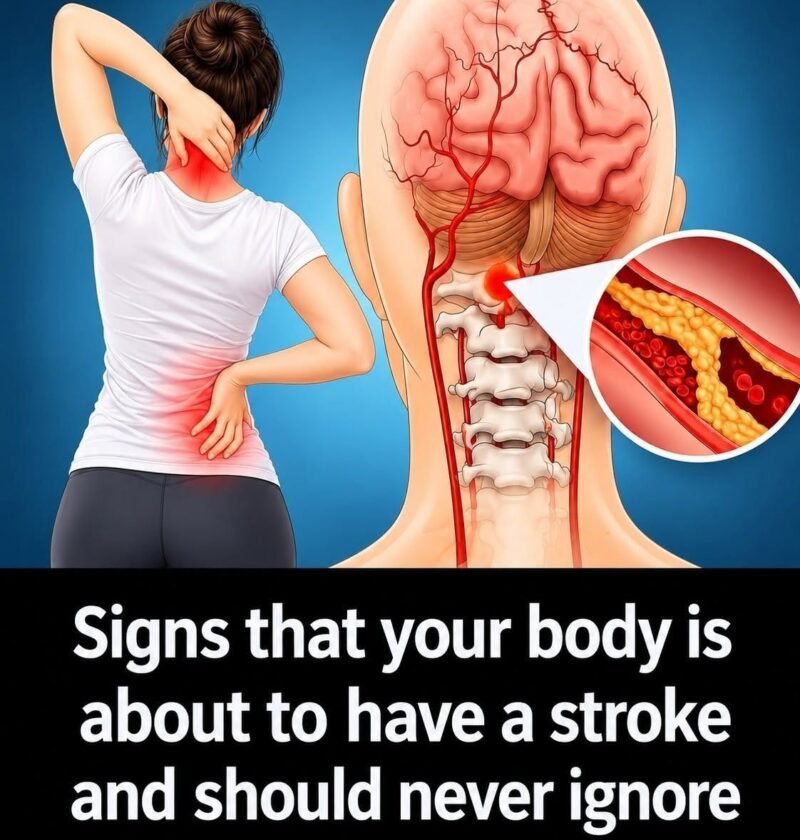
When online articles warn about mysterious signals that a stroke is coming “before it happens,” they are usually describing either Transient Ischemic Attacks (TIAs)—temporary “mini-strokes”—or subtle cardiovascular warning signs that develop in the days or weeks leading up to a major event.
Because a stroke occurs when blood flow to the brain is suddenly blocked or a vessel ruptures, recognizing these precursor signals can act as a life-saving window for medical intervention.
The Most Critical Precursor Warning Signs
1. Transient One-Sided Weakness or Numbness
-
What it feels like: A sudden, temporary heavy feeling, weakness, or “pins and needles” affecting one vertical half of the body (such as the right arm and leg simultaneously) that resolves entirely within 10 to 20 minutes.
-
Why it happens: This is the hallmark signature of a TIA, where a temporary clot blocks a cerebral artery before dissolving on its own.
2. Brief Episodes of Slurred Speech
-
What it feels like: A sudden, fleeting moment where your speech becomes thick, garbled, or difficult to articulate, or you struggle to find the right words when talking.
-
Why it happens: Temporary ischemia in the brain’s language centers disrupts normal speech processing.
3. Sudden, Unexplained Loss of Balance or Vertigo
-
What it feels like: A sudden, intense wave of unsteadiness, dizziness, or difficulty walking straight that feels completely different from routine lightheadedness.
-
Why it happens: Reduced blood flow to the cerebellum or brainstem—the regions governing coordination and spatial equilibrium—triggers sudden balance failure.
4. Temporary Vision Changes in One Eye
-
What it feels like: A sudden blurring, double vision, or a dark “shade” pulling down over the sight of one eye that clears up shortly afterward.
-
Why it happens: The eyes share direct vascular pathways with the brain via the carotid arteries, making them sensitive indicators of plaque instability or reduced blood flow.
5. Sudden, Severe “Thunderclap” Headache
-
What it feels like: A blinding, excruciating headache that strikes with maximum intensity instantly out of nowhere, often described as the “worst headache of your life.”
-
Why it happens: This can indicate minor sentinel leaks or rising intracranial pressure preceding a hemorrhagic event.
Why Prompt Action Matters
A TIA is not a harmless scare; it is a major warning shot from your cardiovascular system. Studies show that the risk of a full-scale stroke is highest in the days and weeks immediately following a TIA.
If you or someone nearby ever experiences sudden neurological symptoms—even if they completely disappear after a few minutes—do not brush them off. Seek emergency medical evaluation immediately so doctors can perform imaging, clear blockages, and adjust medications to protect your brain.
Have you or a loved one ever experienced sudden, temporary neurological changes like these, or are you reviewing these warning signs for general health awareness?