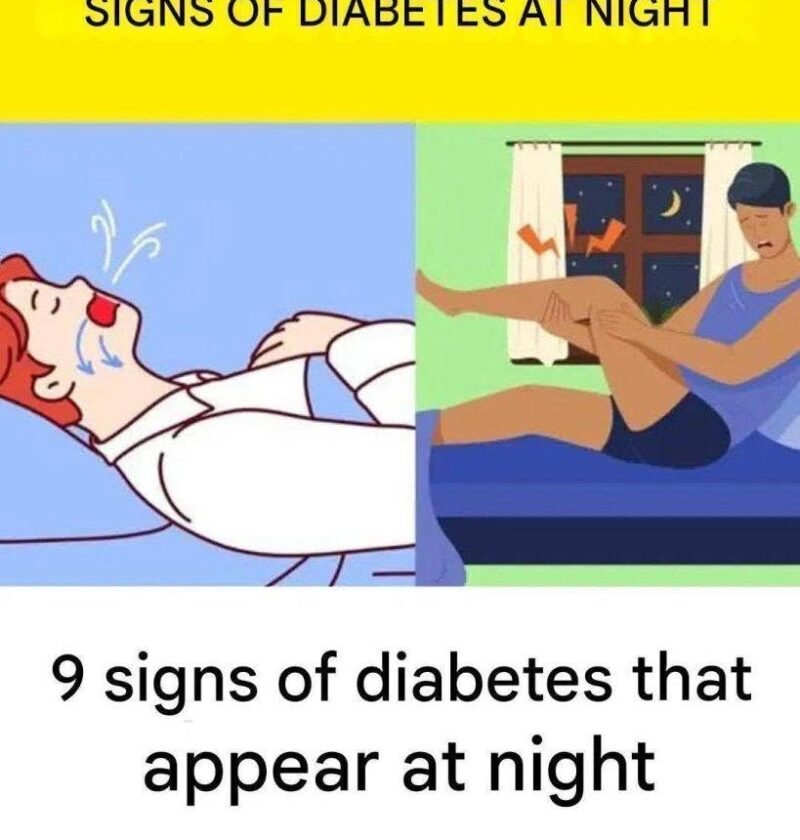
🌙 9 Signs of Diabetes That May Show Up at Night
The headline is a little misleading: diabetes doesn’t have a special set of symptoms that only occur at night. However, some symptoms can become especially noticeable overnight—for example, getting up repeatedly to urinate or experiencing symptoms of low blood sugar while sleeping. (nhs.uk)
9 signs worth paying attention to
- 🚽 Frequent nighttime urination — waking repeatedly to urinate can occur when blood glucose is high.
- 🥤 Excessive thirst — increased urination can lead to dehydration and persistent thirst.
- 😴 Unusual tiredness — disrupted sleep plus high blood glucose can contribute to fatigue.
- 👁️ Blurred vision — high blood glucose can temporarily affect vision.
- 🍽️ Increased hunger — some people experience unusual hunger when glucose isn’t being used effectively by the body’s cells.
- ⚖️ Unexplained weight loss — particularly concerning when accompanied by thirst and frequent urination.
- 🦶 Tingling or numbness — diabetes-related nerve damage can cause abnormal sensations, particularly in the feet.
- 🩹 Slow-healing cuts or recurring infections — high blood glucose can make healing and infection control more difficult.
- 💦 Night sweats, shakiness or confusion — in someone taking insulin or certain diabetes medicines, these can be symptoms of low blood sugar (hypoglycemia) rather than diabetes itself. (CDC Stacks)
⚠️ Don’t assume nighttime urination means diabetes
Nocturia has many other causes, including prostate enlargement, kidney disease, heart failure, sleep apnea, drinking fluids or alcohol late in the evening, caffeine, and certain medications. (CDC)
If you’re experiencing several of these symptoms, particularly frequent urination + excessive thirst + unexplained weight loss or fatigue, ask a healthcare professional about a blood-glucose or HbA1c test. Type 2 diabetes can develop gradually and sometimes causes few or no noticeable symptoms. (nhs.uk)
🚨 Seek urgent medical attention if severe thirst and frequent urination are accompanied by vomiting, abdominal pain, confusion, unusual sleepiness, or rapid/deep breathing, as these can indicate a dangerous diabetic emergency. (nhs.uk)