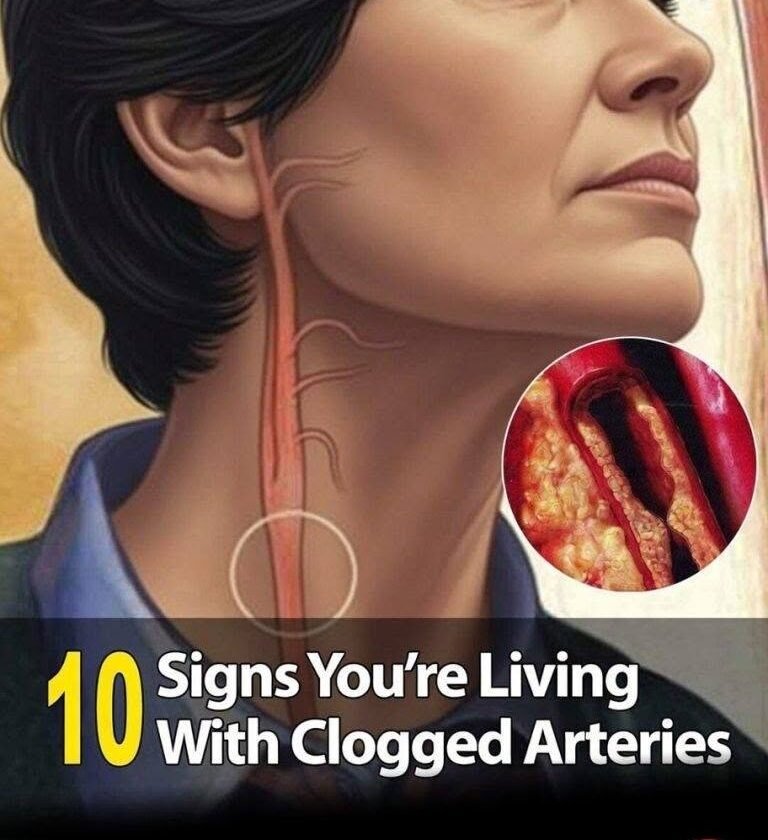
❤️ 10 Possible Warning Signs of Narrowed or Blocked Arteries
“Blocked arteries” isn’t one specific condition. Plaque buildup in the arteries (atherosclerosis) can affect the heart, brain, legs, or other organs, and it may cause no symptoms until disease is advanced.
Possible warning signs include:
Chest pressure or discomfort — especially with exertion; this can be a sign of angina.
Shortness of breath — particularly during physical activity.
Pain spreading to the arm, shoulder, back, neck, or jaw — especially when accompanied by chest discomfort.
Unusual fatigue with exertion — sometimes a less obvious symptom of reduced blood flow to the heart.
Pain or cramping in the calf or thigh while walking — which improves with rest, a possible sign of peripheral artery disease.
A cold foot or leg — particularly when one side is noticeably colder than the other.
Slow-healing wounds on the feet or legs — reduced circulation can interfere with healing.
Numbness or weakness in a leg or foot — can occur with peripheral artery disease.
Sudden weakness or numbness on one side of the body — may indicate a stroke or TIA and requires emergency care.
Sudden vision or speech problems — can also signal reduced blood flow to the brain.
🚨 Don’t wait for symptoms to pass
Chest pressure/pain, severe shortness of breath, sudden facial drooping, one-sided weakness, difficulty speaking, or sudden vision loss are emergencies. Call your local emergency service immediately.
Also, don’t assume that having no symptoms means your arteries are clear. High blood pressure, high LDL cholesterol, diabetes, smoking, and family history can increase cardiovascular risk without causing noticeable symptoms.
Bottom line: There is no reliable list of symptoms that can diagnose a “blocked artery.” Persistent exertional symptoms should be medically evaluated, while sudden heart or neurological symptoms require emergency treatment.