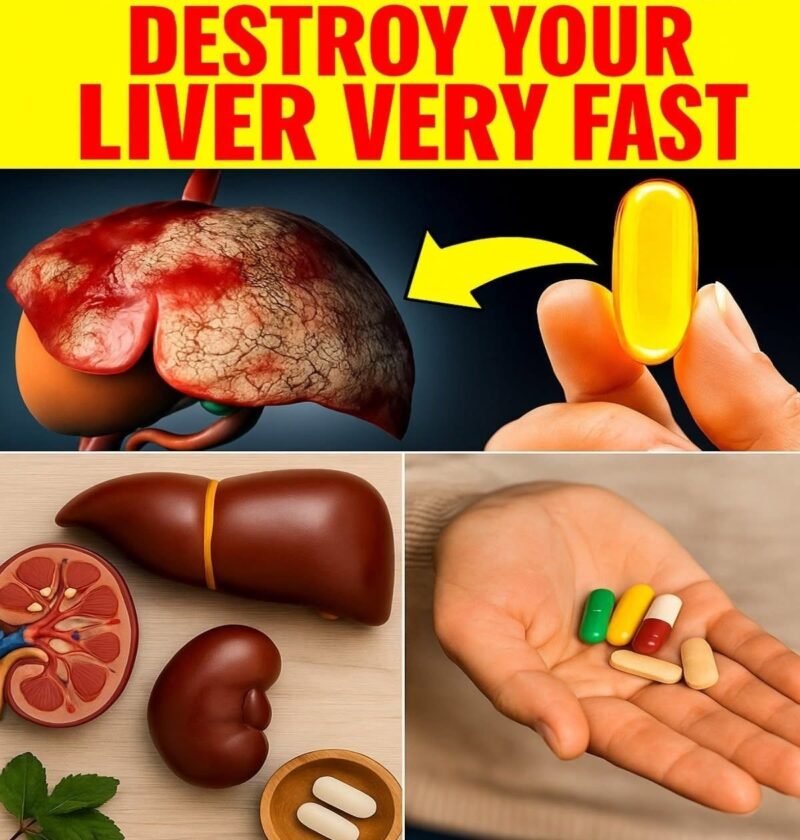
While vitamins and supplements are often marketed as entirely safe because they are “natural,” misuse, high doses, or chronic overuse can place a heavy filtration and metabolic burden on your liver and kidneys. Because these two organs are responsible for processing, filtering, and detoxifying everything that enters your bloodstream, they are particularly vulnerable to supplement-induced injury.
Here are 9 vitamins, minerals, and popular supplements that can affect your liver and kidneys when misused:
1. Vitamin A (and other Fat-Soluble Vitamins)
-
The Risk: Liver damage (Hepatotoxicity).
-
Why it happens: Vitamins A, D, E, and K are fat-soluble, meaning your body stores excess amounts in the liver and fatty tissues rather than flushing them out in your urine. Megadoses of Vitamin A can overwhelm the liver’s storage capacity, leading to cellular inflammation, fibrosis, and chronic liver injury.
2. Green Tea Extract
-
The Risk: Severe liver toxicity.
-
Why it happens: While drinking green tea in liquid form is generally safe, concentrated green tea extract (often found in weight-loss or energy supplements) contains high levels of catechins like EGCG. In high supplemental doses, these catechins can trigger acute liver injury, sometimes resulting in liver failure.
3. Turmeric / Curcumin
-
The Risk: Liver inflammation and kidney stones.
-
Why it happens: Cooking with turmeric is safe, but high-potency extract supplements—often taken for joint pain—deliver concentrated curcumin. Studies have linked these high doses to drug-induced liver injury. Additionally, turmeric contains natural oxalates, which can bind with calcium and contribute to kidney stone formation in susceptible individuals.
4. Vitamin C
-
The Risk: Kidney stones.
-
Why it happens: Vitamin C is water-soluble, so excess amounts usually wash out. However, when taken in massive megadoses (typically thousands of milligrams daily), your body metabolizes the excess Vitamin C into oxalate. High levels of oxalate in the urine combine with calcium to form painful kidney stones.
5. Excess Protein and Creatine
-
The Risk: Kidney strain and elevated filtration stress.
-
Why it happens: High-protein diets and heavy protein supplementation force the kidneys to work overtime to filter out nitrogen waste products. Similarly, while standard doses of creatine are safe for healthy individuals, excessive intake can artificially elevate serum creatinine levels (a key marker used to test kidney function) and place undue stress on compromised kidneys.
6. Iron
-
The Risk: Liver toxicity and oxidative stress.
-
Why it happens: Iron is a potent pro-oxidant when it accumulates in excess. The liver is the primary storage site for iron in the body. Unnecessary iron supplementation—or taking it without a diagnosed deficiency—can cause iron overload, leading to cellular damage, liver scarring (cirrhosis), and metabolic dysfunction.
7. Black Cohosh
-
The Risk: Acute liver injury.
-
Why it happens: Commonly used to manage menopausal symptoms like hot flashes, black cohosh has been frequently flagged by health agencies due to numerous documented cases of unexplained acute hepatitis, liver failure, and the need for liver transplants.
8. Potassium Supplements
-
The Risk: Dangerous electrolyte imbalances and secondary kidney/heart complications.
-
Why it happens: The kidneys tightly regulate blood potassium levels. If you take potassium supplements without a medical prescription—especially if you have underlying, undiagnosed kidney dysfunction—your kidneys cannot efficiently clear the excess. High blood potassium (hyperkalemia) can lead to severe, life-threatening heart arrhythmias.
9. Niacin (Vitamin B3)
-
The Risk: Liver toxicity (at high doses).
-
Why it happens: While standard B-complex vitamins are safe, high-dose “therapeutic” niacin (nicotinic acid) used historically for cholesterol management is notorious for causing elevated liver enzymes and, in severe cases, acute hepatotoxicity and liver failure when taken unmonitored.
Important Safety Note: Dietary supplements are not regulated as strictly as pharmaceutical drugs before hitting the market. If you take multiple supplements or have pre-existing kidney or liver conditions, always consult a healthcare professional or pharmacist before starting a new regimen.
Are you currently taking any specific vitamins or supplements, or experiencing any symptoms that prompted you to look into this?