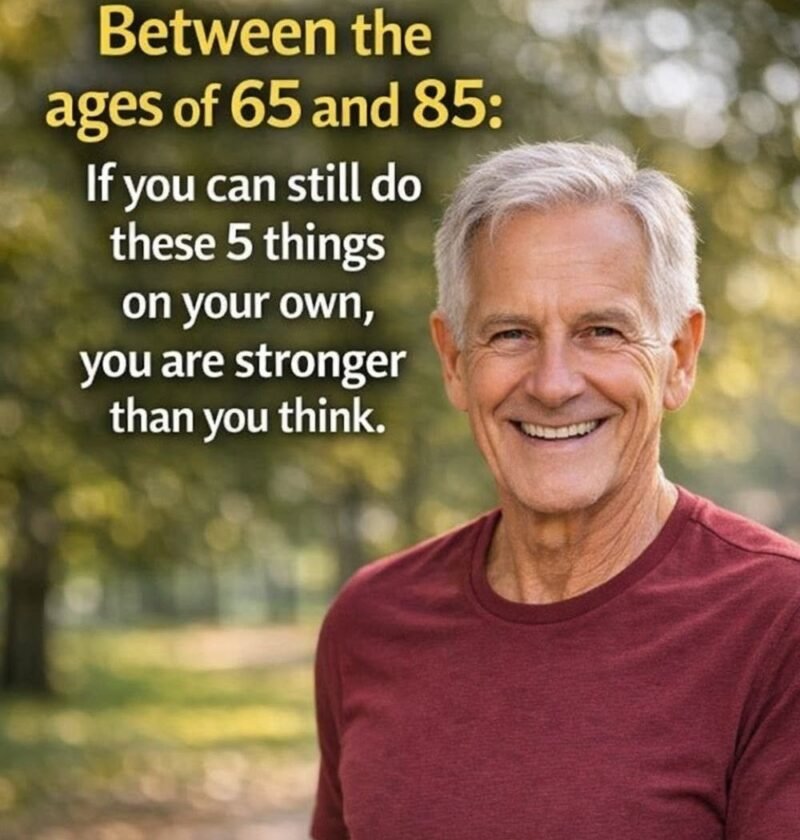
This headline is really about functional independence, not a strict test of whether someone is “strong.”
If a person between 65 and 85 can comfortably do everyday tasks independently, that’s generally a positive sign of physical function.
5 useful abilities to look at
-
Get up from a chair without using your hands
This requires leg and hip strength and good balance. -
Walk at a normal pace without significant difficulty
Walking ability is an important indicator of mobility and independence. -
Climb a flight of stairs
This combines leg strength, balance, and cardiovascular capacity. -
Carry ordinary household items
Being able to safely carry groceries or other light-to-moderate objects reflects useful upper-body and grip strength. -
Get dressed, bathe, and perform basic household tasks independently
These activities reflect overall functional ability and coordination.
Don’t turn it into a pass/fail test
Someone who can’t do one of these doesn’t necessarily mean they’re unhealthy or “weak.” Arthritis, an old injury, balance problems, or other limitations can affect individual tasks.
More useful than comparing yourself with an arbitrary age group is tracking your own abilities over time. A gradual decline in walking speed, balance, grip, or ability to rise from a chair can be worth discussing with a healthcare professional.
And if you want to maintain strength as you age, regular resistance exercise, walking/aerobic activity, adequate protein, and balance training are among the most useful habits.