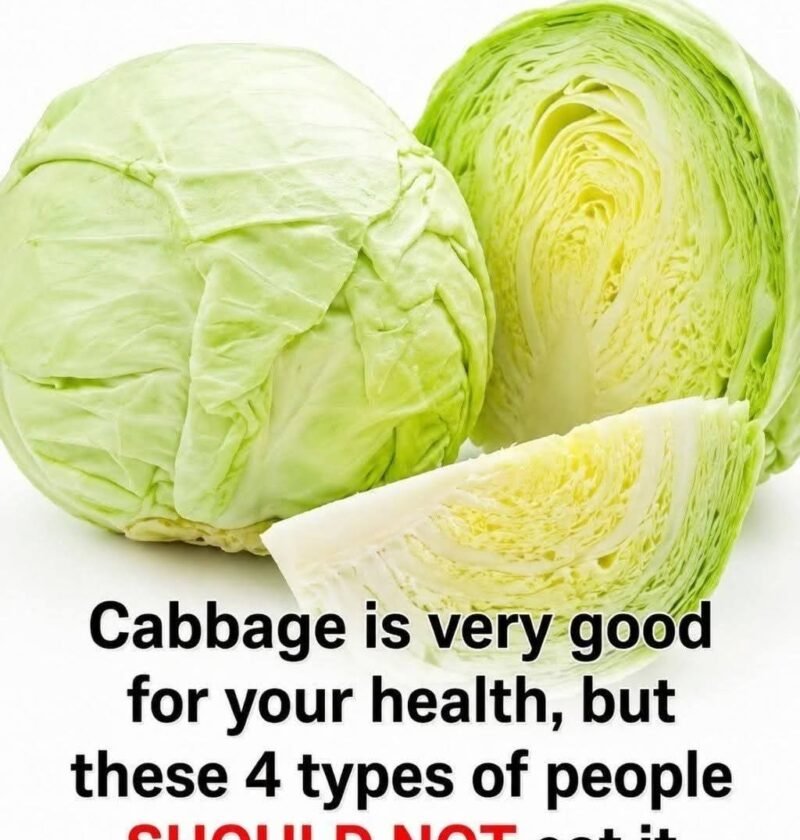
When a viral health video warns that “4 types of people should avoid eating cabbage,” it usually leans on dramatic framing to grab your attention. Cabbage is a nutritional powerhouse packed with vitamin C, vitamin K, fiber, and powerful sulfur-containing compounds called glucosinolates that support cellular health.
However, like many cruciferous vegetables, cabbage contains specific biological compounds that interact with certain medical conditions, medications, or sensitive digestive systems.
Here are the four specific groups of people who do need to exercise caution or limit their intake of raw cabbage:
1. Individuals with Irritable Bowel Syndrome (IBS) or FODMAP Sensitivities
-
Why Cabbage Triggers Them: Cabbage is rich in FODMAPs (specifically fructans, a type of fermentable short-chain carbohydrate) and tough, insoluble fiber.
-
The Result: If your gut struggles to break down fructans, bacteria in your large intestine rapidly ferment them, producing large amounts of gas. For someone with IBS, this fermentation process triggers uncomfortable bloating, abdominal cramping, flatulence, and diarrhea. (Cooking cabbage thoroughly breaks down some of these complex fibers and makes it much easier to digest).
2. People Taking Blood-Thinning Medications (Like Warfarin)
-
Why Cabbage Triggers Them: Cabbage is exceptionally rich in Vitamin K, a vital nutrient that plays a primary role in helping blood clot properly.
-
The Result: If you are taking anticoagulant medications like Warfarin (Coumadin) to prevent blood clots, your doctor requires your daily Vitamin K intake to remain relatively consistent. Suddenly introducing massive, fluctuating amounts of raw or cooked cabbage can throw off your blood-clotting metrics and interfere with the medication’s efficacy. (You don’t have to banish cabbage forever, but consistency is key—talk to your doctor before making major dietary shifts).
3. Those with Hypothyroidism (Underactive Thyroid)
-
Why Cabbage Triggers Them: Raw cruciferous vegetables like cabbage contain compounds called goitrogens.
-
The Result: Goitrogens can interfere with the thyroid gland’s ability to absorb iodine, which is necessary for producing thyroid hormones. However, there is a major catch: cooking deactivates most goitrogenic properties. Steaming, boiling, or roasting cabbage largely neutralizes this effect, meaning only those with severe, unmanaged iodine deficiency or significant hypothyroidism need to avoid raw cabbage in large quantities.
4. Anyone Prone to Severe Acid Reflux or GERD
-
Why Cabbage Triggers Them: Cabbage contains complex sugars and sulfur compounds that can be slow and heavy to digest, particularly when eaten raw or in large quantities.
-
The Result: Slow digestion can lead to delayed gastric emptying and increased intra-abdominal pressure, which can relax the lower esophageal sphincter and trigger heartburn or acid reflux symptoms in sensitive individuals.
The Bottom Line
Unless you fall into one of these specific medical categories, cabbage is an incredible, fiber-rich food that supports long-term health. If raw cabbage gives you trouble, simply cooking it (steaming, sautéing, or fermenting it into sauerkraut) drastically alters its chemical structure, making it much gentler on the digestive system.