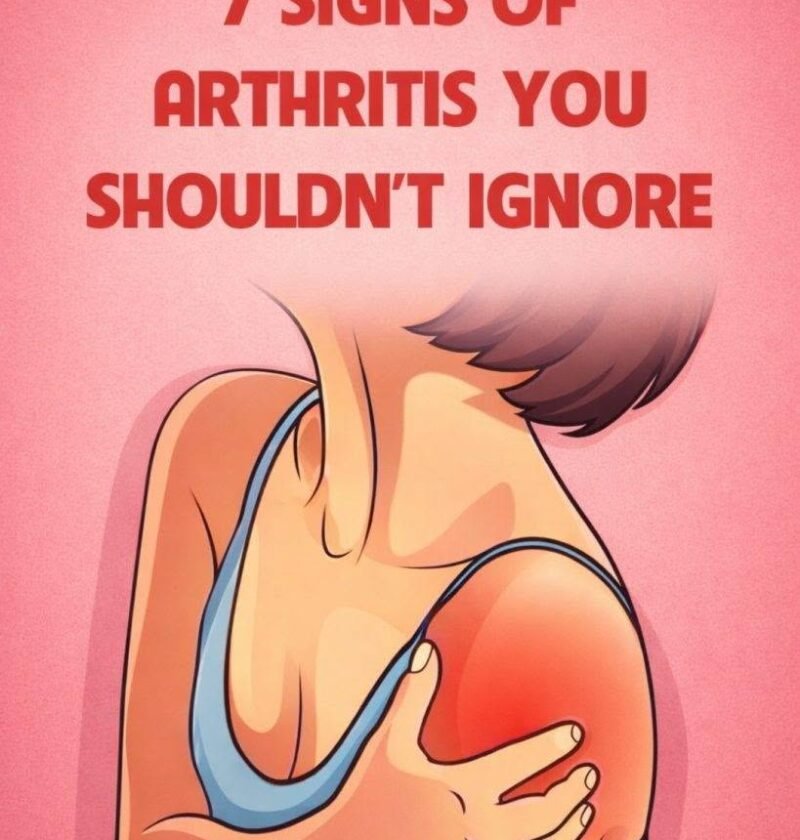
Arthritis affects millions of people worldwide, yet its early warning signs are frequently brushed off as simple “growing pains,” normal fatigue, or the natural result of a hard workout. However, ignoring the early flags of joint inflammation can allow underlying cartilage and tissue damage to progress unchecked.
Rheumatologists and orthopedic specialists emphasize that you should never ignore these 7 key signs of arthritis:
1. Persistent Joint Pain That Lingers
-
What it feels like: A dull ache, sharp twinge, or throbbing discomfort in one or more joints (such as your hands, knees, hips, or lower back) that doesn’t go away with standard rest.
-
Why it matters: While occasional soreness after heavy lifting is normal, persistent pain that returns regularly is often the primary signal that cartilage protecting your joint surfaces is wearing down or becoming inflamed.
2. Morning Joint Stiffness Lasting Longer Than 30 Minutes
-
What it feels like: Waking up and feeling like your fingers, wrists, or knees are rusted shut, making it difficult to make a fist or bend your legs for a prolonged period.
-
Why it matters: While a brief moment of stiffness upon waking is common as you age, joint stiffness that takes more than 30 minutes to loosen up is a classic hallmark of inflammatory arthritis (like rheumatoid arthritis) or advanced osteoarthritis.
3. Visible Swelling and Warmth Around the Joint
-
What it feels like: The skin over a joint looks visibly puffed up, feels tender to the touch, and may even feel noticeably warmer than the surrounding skin.
-
Why it matters: Swelling indicates active inflammation inside the joint capsule, often caused by a buildup of synovial fluid or an immune response attacking the joint lining.
4. A Grating, Clicking, or Creaking Sound (Crepitus)
-
What it feels like: Hearing or feeling a distinct crunching, grinding, or popping sensation when you move your knee, hip, or shoulder.
-
Why it matters: While occasional harmless joint popping happens to everyone, a continuous grating sensation means the smooth cartilage cushion has worn away, causing bone surfaces to rub directly against each other.
5. Reduced Range of Motion and Flexibility
-
What it feels like: Finding it difficult to fully straighten your arm, bend your knee, turn your neck, or grip objects the way you used to.
-
Why it matters: As joint inflammation and structural damage progress, scar tissue, bone spurs, and structural changes can physically restrict how far a joint is able to move.
6. Unexplained Joint Instability or “Giving Way”
-
What it feels like: Your knee suddenly buckles beneath you, or your ankle feels like it is going to roll, making you feel unsteady on your feet.
-
Why it matters: Arthritis can weaken the surrounding tendons, ligaments, and supporting muscles, compromising the structural integrity of the joint and increasing your risk of falls.
7. Persistent Fatigue and Low-Grade Fever (Inflammatory Signs)
-
What it feels like: An overwhelming sense of physical exhaustion that sleep doesn’t fix, sometimes accompanied by a low-grade fever or unexplained weight loss.
-
Why it matters: Systemic types of arthritis—such as rheumatoid arthritis or psoriatic arthritis—are autoimmune disorders. This means your immune system is actively attacking your body’s tissues, triggering a systemic inflammatory response that drains your energy.
What You Should Do Next
If you are experiencing persistent joint pain, swelling, or prolonged morning stiffness that lasts for more than a few weeks, don’t just wait it out. Early diagnosis by a primary care physician or a rheumatologist can make a dramatic difference, allowing you to protect your joint function through physical therapy, lifestyle adjustments, or targeted medical treatments before permanent damage occurs.
Have you or a loved one been noticing any persistent joint stiffness, pain, or swelling lately?