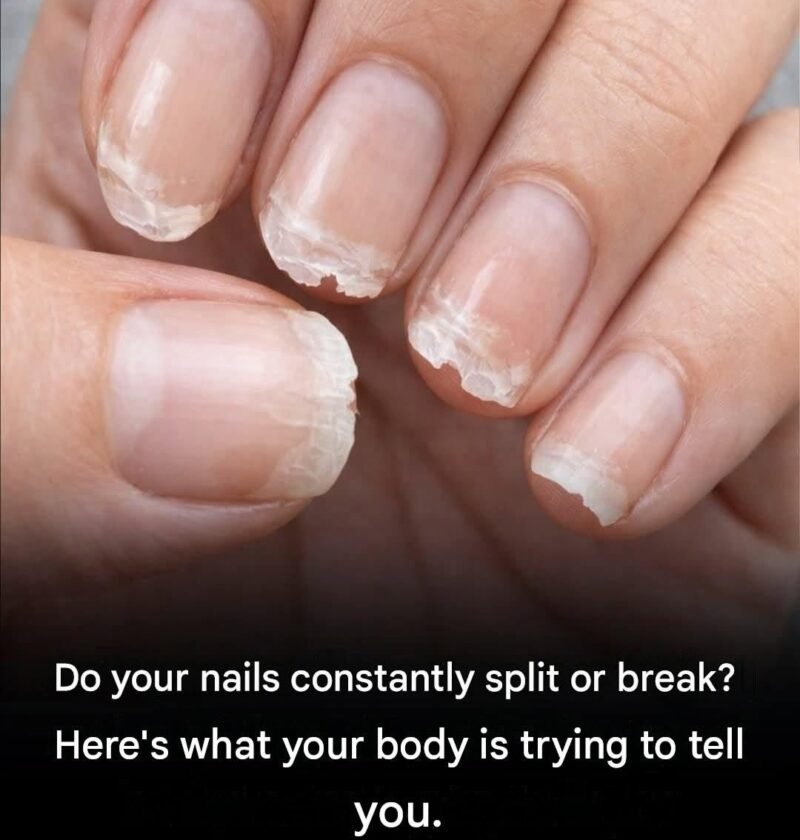
Viral health blogs and sensationalized wellness reels love to use dramatic, anxiety-inducing hooks like “Weak or brittle nails: What your body might be trying to tell you” to suggest that every single peeling edge, split layer, or soft nail is a terrifying harbinger of severe internal organ failure or a catastrophic systemic disease.
While your nails can occasionally offer subtle clues about your overall health, the reality of why nails become weak or brittle is usually far more practical—stemming from daily physical habits, moisture exposure, or normal aging rather than a hidden medical emergency.
Here is a look at what your nails are actually made of, what causes them to break, and when nail changes genuinely warrant a doctor’s attention.
What Are Nails Actually Made Of?
Nails are not living tissue; they are hard plates made of keratin, a tough, fibrous protein.
-
The Structure: Your nails grow out from the matrix (hidden beneath the cuticle) as layers of dead, compacted keratin cells.
-
Moisture and Lipids: Healthy nails are not just hard—they require about 18% water content and natural lipids to remain flexible. When nails lose that moisture or when the structural bonds between keratin layers are compromised, they become dry, brittle, splitting, or peeling.
Where the “Internal Warning Sign” Hyperbole Goes Wrong
Clickbait articles love to claim that weak nails instantly mean your body is failing or starving of specific nutrients. In reality, the vast majority of brittle nails are caused by external factors right on the surface:
-
Frequent Water Immersion: Constantly washing dishes, swimming, or soaking your hands in water causes nails to repeatedly expand and contract as they absorb and lose moisture. This constant swelling cycle breaks down the keratin bonds, leading to peeling and splitting (a condition dermatologists call onychoschizia).
-
Harsh Chemicals and Solvents: Frequent use of acetone-based nail polish removers, harsh household cleaning chemicals, or stripping hand sanitizers strips away the natural protective lipid barrier on the nail plate.
-
Gel Manicures and Acrylics: The frequent application and removal processes—especially scraping off gel polish or using harsh filing and acetone soaking—severely damage the topmost layers of the nail plate.
When Internal Factors Do Play a Role
While external damage is the most common culprit, certain internal or nutritional factors can influence nail strength:
-
Iron Deficiency (Anemia): Low iron can occasionally cause a specific nail deformity called koilonychia (spoon nails, where the nail becomes thin and dips inward like a spoon). However, general brittleness without this specific shape is rarely due to iron alone.
-
Thyroid Disorders: Both hypothyroidism (underactive thyroid) and hyperthyroidism can slow down cell turnover and metabolism, leading to dry, brittle, or slow-growing nails.
-
Normal Aging: Just as our skin and hair change over time, the rate of nail growth slows down as we age, and nails naturally lose moisture, making them more prone to splitting.
What Actually Helps Strengthen Weak Nails
Skip the expensive, unverified “nail growth” supplements unless a blood test confirms a genuine deficiency. Protecting and strengthening your nails is all about moisture retention and mechanical protection:
-
Moisturize Immediately After Washing: Apply a thick hand cream or cuticle oil containing ceramides, shea butter, or squalane right after washing your hands while they are still slightly damp to lock in moisture.
-
Wear Gloves for Wet Work: Put on rubber or nitrile gloves when washing dishes, cleaning with chemicals, or gardening to shield your nails from water logging and harsh detergents.
-
Be Gentle with Manicures: Give your nails regular breaks from gel polish or acrylics, use acetone-free polish removers, and avoid aggressive metal pushers that can traumatize the nail matrix.
When to Actually See a Doctor
While cosmetic brittleness is usually harmless, you should consult a dermatologist or primary care physician if you notice significant medical red flags:
-
Pitting or Discoloration: Deep pits, holes, or sudden yellowing/brown discoloration of the nail plate (which can sometimes be associated with psoriasis or fungal infections).
-
Dark Streaks: A dark vertical stripe under the nail that isn’t the result of an obvious injury (which should be checked to rule out subungual melanoma).
-
Nails Separating from the Nail Bed: A condition known as onycholysis, where the nail lifts away from the skin underneath.
Don’t let sensational headlines panic you over a chipped nail—protecting your hands from water and harsh chemicals is usually all it takes to restore your nails’ natural resilience!