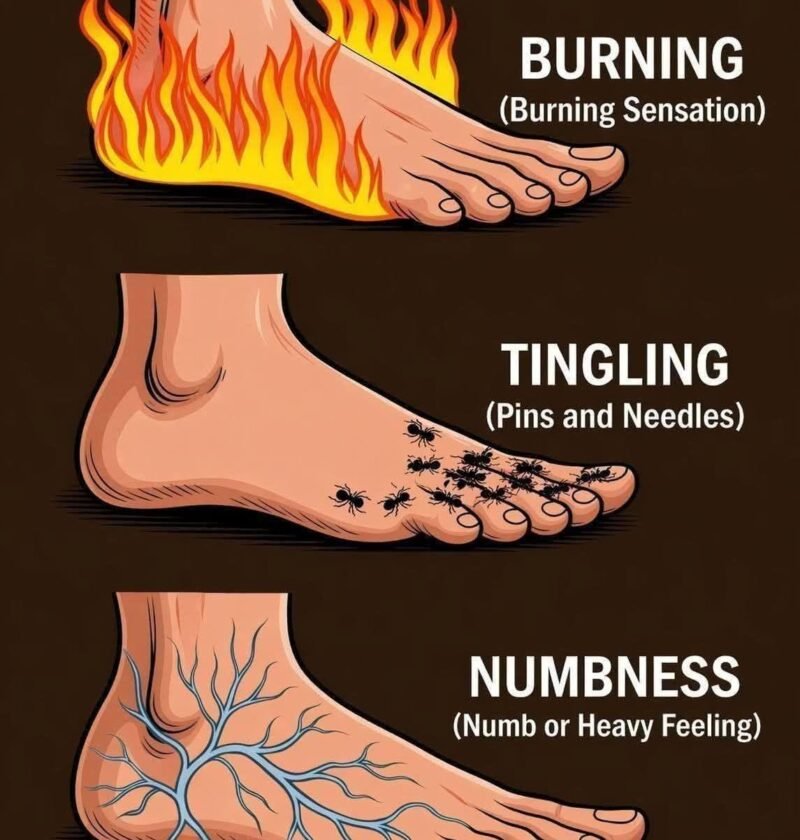
Experiencing burning, numbness, and tingling in the feet is a signal from your nervous system that something is irritating or damaging the nerves in your lower extremities. Clinically, this collection of symptoms is often referred to as peripheral neuropathy, and it can stem from a wide variety of causes.
Here is a breakdown of why these sensations happen, the most common underlying causes, and when you should seek medical evaluation.
Why the Sensation Occurs
Your peripheral nerves act like electrical cables transmitting signals between your feet and your brain (temperature, touch, pain). When these nerves—or the tiny blood vessels that nourish them—are damaged, compressed, or deprived of key nutrients, they start misfiring.
-
Numbness happens when nerve signals are blocked entirely.
-
Tingling (“pins and needles”) occurs when nerves partially or erratically fire as blood flow or function tries to return.
-
Burning pain is often the result of damaged small-fiber nerves misinterpreting normal signals as intense heat or pain.
Common Causes of Foot Burning and Tingling
-
Peripheral Neuropathy (often linked to Diabetes): High blood sugar over time damages the small blood vessels that supply nerves, particularly in the feet. This is one of the most frequent causes of chronic burning and numbness.
-
Nerve Compression (e.g., Tarsal Tunnel Syndrome or Sciatica): A pinched nerve in the lower back (sciatica) or compression of the tibial nerve inside the ankle (tarsal tunnel syndrome) can radiate numbness and tingling down into the sole or toes.
-
Vitamin Deficiencies: A lack of Vitamin B12 (essential for nerve health and myelin sheath maintenance) or other B vitamins can lead to progressive nerve damage.
-
Alcohol Use and Toxins: Chronic heavy alcohol consumption can impair the body’s ability to absorb nutrients and directly damage nerve tissue. Exposure to certain toxins can have a similar effect.
-
Circulatory Issues: Peripheral Artery Disease (PAD) reduces blood flow to the legs and feet, starving tissues and nerves of the oxygen they need to function properly.
-
Foot Mechanics (e.g., Plantar Fasciitis or Fallen Arches): Severe inflammation or structural strain in the foot can put localized pressure on passing nerves.
When to See a Doctor
While occasional “foot falling asleep” is normal, persistent or worsening burning, numbness, and tingling require a professional medical evaluation to pinpoint the root cause.
Seek medical attention promptly if:
-
The symptoms are spreading upward into your ankles or legs.
-
You have diabetes or a history of circulation problems.
-
You experience sudden weakness or difficulty balancing.
-
Sores or cuts on your feet are healing slowly or go unnoticed because of numbness.