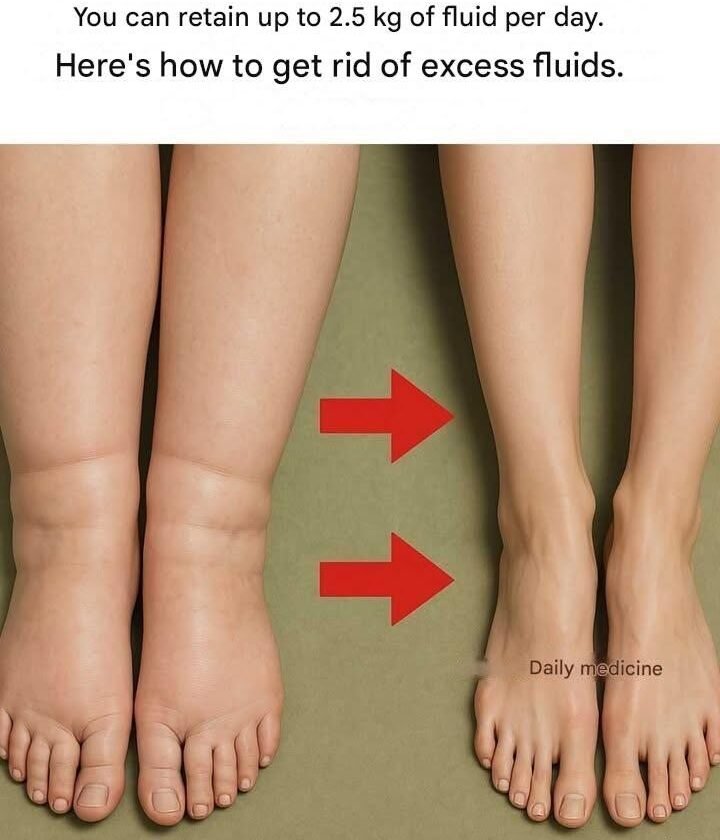
💧 “You Can Retain 2.5 kg of Fluid Per Day” — What You Should Actually Know
Your body can temporarily gain several pounds from water, particularly after a salty meal, hormonal changes, prolonged sitting, or certain medications. But the claim that everyone routinely “retains 2.5 kg of fluid per day” is misleading.
True fluid retention, called edema, means excess fluid is accumulating in body tissues. It can result from something as simple as prolonged sitting or high salt intake, but it can also be caused by heart, kidney, liver, or vein problems or certain medications. Mayo Clinic+1
What can safely help mild swelling?
- Reduce excess salt: High sodium intake can encourage fluid retention. Mayo Clinic
- Move regularly: Walking and moving the muscles of swollen limbs can help fluid return toward the heart. Mayo Clinic
- Elevate swollen legs: Raising them above heart level for periods during the day may reduce swelling. Mayo Clinic
- Avoid sitting or standing in one position for long periods.
- Use compression garments only when appropriate: They can help certain types of leg edema, but it’s best to ask a healthcare professional which type is suitable. Mayo Clinic
🚫 Don’t try to “flush” the fluid
Drinking huge amounts of water, taking herbal “water pills,” or using prescription diuretics without medical guidance isn’t a safe way to lose water weight. Diuretics may be appropriate for some medical causes of edema, but a clinician should determine whether they’re needed and what dose is appropriate. Mayo Clinic
🚨 When swelling needs medical attention
Get medical advice if swelling is persistent, worsening, unexplained, severe, painful, or suddenly appears in one leg. Sudden one-sided swelling can be a sign of a blood clot. Mayo Clinic+1
Seek emergency care for swelling accompanied by shortness of breath, chest pain, severe breathing difficulty, or coughing up blood. These can indicate a potentially life-threatening problem such as a pulmonary embolism or fluid in the lungs. Mayo Clinic+1
Bottom line: A rapid increase on the scale can sometimes be mostly water, but persistent fluid retention isn’t simply “extra water to flush out.” The important question is why the fluid is accumulating.