Does One Blood Type Make You More Likely to
Live to 100?
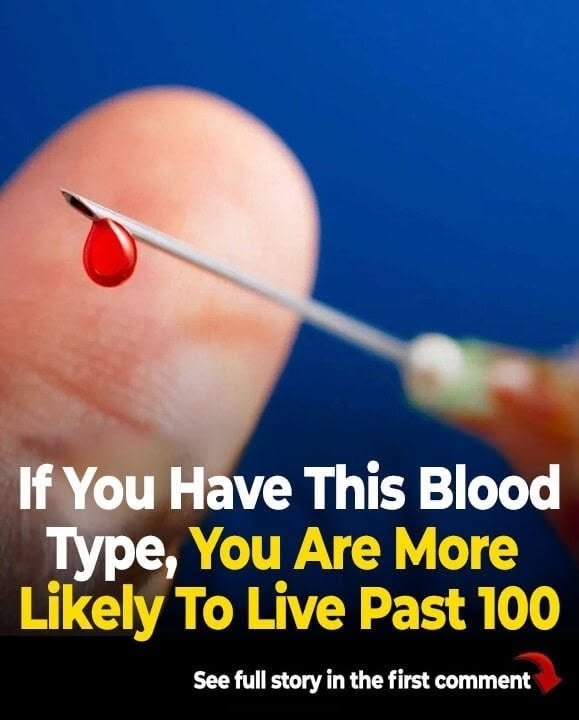
The blood type most often mentioned in this claim is type B. However, the evidence is much less convincing than the headline suggests.
A 2004 Japanese study compared 269 people aged 100+ with 7,153 controls. Type B occurred in 29.4% of the centenarians versus 21.9% of the controls, leading the researchers to suggest that type B might be associated with exceptional longevity. PubMed+1
But later research has not consistently reproduced that finding. A much larger Chinese study examined 2,201 centenarians and 2,330 middle-aged controls and found no statistically significant association between blood type A, B, O, or AB and longevity. Its meta-analysis likewise found no significant relationship. PubMed+1
Other research has produced contradictory results. One study actually found that type B was associated with worse, rather than better, survival, illustrating why a single study shouldn’t be interpreted as proof that a blood type determines lifespan. PubMed
So, can your blood type determine whether you reach 100?
No. Your ABO blood type may be associated with differences in susceptibility to certain diseases, but current evidence does not establish that having type B—or any other ABO blood type—makes you more likely to become a centenarian. A recent study of people aged 85+ also found no significant relationship between ABO/Rh blood groups and longevity. PubMed
Factors such as smoking, physical activity, diet, blood pressure, diabetes, cardiovascular health, genetics, socioeconomic circumstances, and access to healthcare have much stronger relevance to healthy longevity.
So if you have type B blood, that’s interesting—but it isn’t a ticket to 100.
Sources