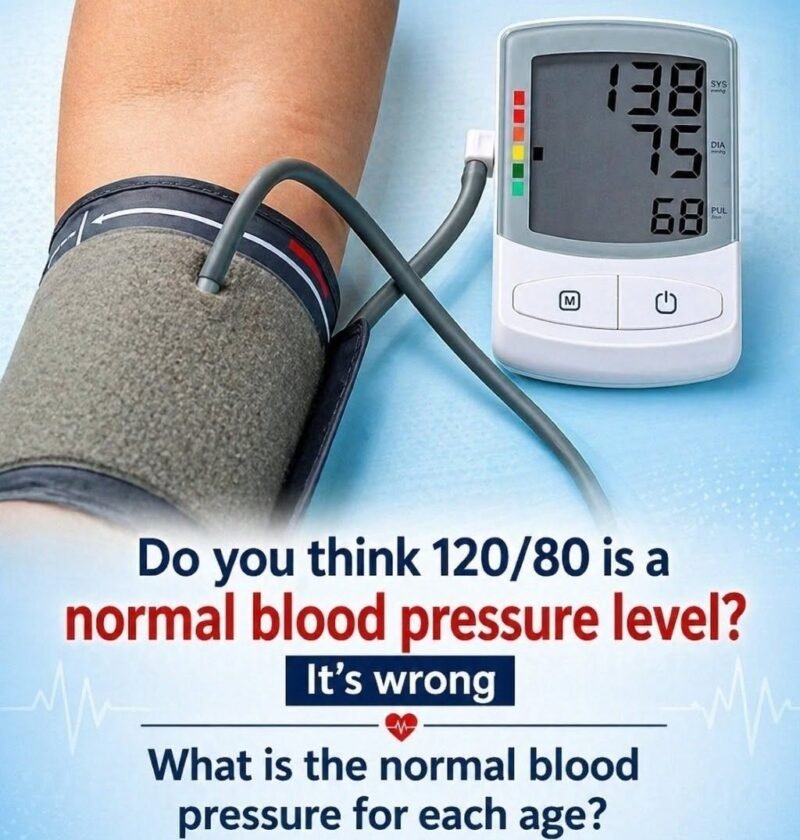
When you see articles or search queries asking “What is the normal blood pressure for each age?”, they often present neat little charts claiming that your blood pressure should steadily climb year after year—implying that having high blood pressure in your 60s, 70s, or beyond is just an inevitable, harmless part of getting older.
That is a dangerous medical myth.
While it is true that average blood pressure tends to increase with age as arteries naturally stiffen, clinically “normal” or healthy blood pressure does not change as you get older. A healthy target remains the same whether you are 20 or 90 years old.
What Are the Official Blood Pressure Categories?
According to major cardiovascular guidelines (such as the American Heart Association), blood pressure is measured in two numbers: systolic (the pressure when your heart beats) over diastolic (the pressure when your heart rests between beats).
The standard categories for adults of almost all ages are:
-
Normal: Less than 120 / 80 mmHg
-
Elevated: 120–129 systolic AND less than 80 diastolic
-
Stage 1 Hypertension: 130–139 systolic OR 80–89 diastolic
-
Stage 2 Hypertension: 140 mmHg or higher systolic OR 90 mmHg or higher diastolic
Why the “Age-Adjusted” Chart Myth Is Dangerous
Older adults are frequently told, “Well, 140/90 is fine for someone your age.” Geriatric cardiologists strongly push back against this idea. Allowing blood pressure to run unchecked in older age places unnecessary, chronic strain on the heart, increases the risk of stroke, and damages delicate blood vessels in the kidneys and brain.
Special Considerations for Older Adults
While the goal blood pressure (under 120/80 mmHg) remains ideal, doctors managing blood pressure in older adults look at the whole picture with a few safety caveats:
-
Orthostatic Hypotension: Older adults are more prone to sudden drops in blood pressure when standing up. If blood pressure medications lower readings too aggressively, it can cause severe dizziness, lightheadedness, and dangerous falls.
-
Individualized Targets: For frail older adults or those with multiple complex conditions, a doctor may sometimes set a slightly more flexible target to prevent fainting or kidney strain, but high readings are never simply “normal” just because of a birthday.
The Bottom Line
There is no sliding scale where high blood pressure suddenly becomes okay with age. Maintaining a target of under 120/80 mmHg (or working closely with a physician to find a safe, personalized target) is essential for protecting your cardiovascular health.
Are you looking at these guidelines because of a recent reading at home or at the doctor’s office, or sorting through conflicting advice online?