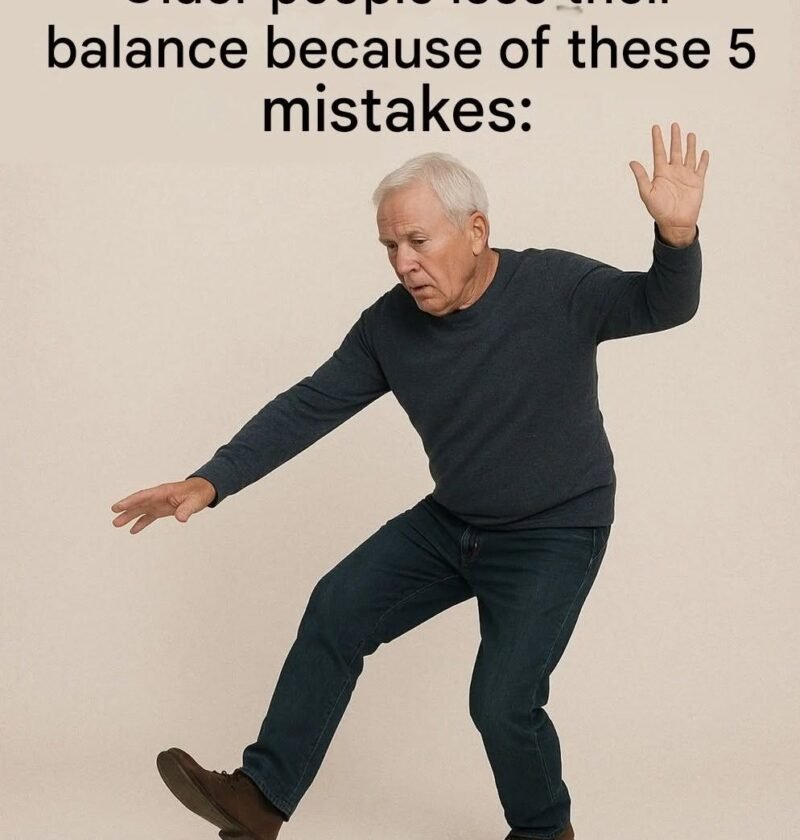
That classic listicle hook—“5 Common Mistakes That Cause Older People to Lose Their Balance”—is a frequent fixture in health feeds. While it doesn’t always rely on outright fear-mongering, it often plays on deep concerns about aging, independence, and the fear of falling, sometimes pairing real physical advice with pitches for overpriced balance supplements or unverified gadgets.
Maintaining balance as we age is a vital part of preserving mobility and preventing falls. When you look at the actual clinical science of geriatric balance and vestibular health, “mistakes” are less about clumsy errors and more about common lifestyle habits that quietly chip away at our body’s stability systems.
The Real Factors Behind Age-Related Balance Loss
Balance is not controlled by a single body part; it is a complex, silent coordination between your vision, your inner ear (vestibular system), and proprioception (your brain’s awareness of where your body is in space, fed by sensors in your joints and muscles).
When older adults experience a decline in balance, it is usually influenced by a combination of these physiological shifts and habits:
1. Allowing Lower-Body Muscle Mass and Strength to Dwindle (Sarcopenia)
-
The Reality: Your leg muscles—especially your calves, quads, and glutes—are your primary shock absorbers and postural stabilizers. If someone adopts a heavily sedentary lifestyle, these muscles naturally weaken. Without strong lower limbs, making micro-corrections to stay upright becomes much harder.
2. Ignoring Footwear and Sensory Feedback
-
The Reality: The soles of your feet are packed with nerve endings that send critical signals to your brain about the ground beneath you. Wearing thick, rigid-soled shoes with high platforms, or shuffling around in loose slippers with no traction, essentially blinds those sensory nerves, making missteps much more likely.
3. Polypharmacy (Unmanaged Medication Side Effects)
-
The Reality: Many older adults take multiple prescription medications. Certain combinations—or specific drugs like blood pressure medications that lower pressure too much, sedatives, antihistamines, and some antidepressants—can cause subtle dizziness, lightheadedness, or delayed reaction times, directly impairing balance.
4. Neglecting Vision and Hearing Changes
-
The Reality: Your eyes do the heavy lifting when it comes to spatial orientation. Outdated eyeglass prescriptions, uncorrected cataracts, or progressive vision loss remove crucial environmental cues. Interestingly, the inner ear houses both your hearing and your primary balance center (the vestibular labyrinth), which is why untreated inner-ear or hearing issues often correlate with a higher risk of trips and stumbles.
5. Slacking on Hydration and Nutrition
-
The Reality: Mild, chronic dehydration is surprisingly common in older age because the natural sensation of thirst tends to dull over time. Dehydration leads to drops in blood pressure when standing up, causing sudden lightheadedness or wooziness that can instantly trigger a loss of balance.
Proactive Steps to Protect Stability
Unlike what sensationalist articles might imply, protecting balance doesn’t require expensive gimmicks or secret tonics. Simple, evidence-based habits make a massive difference:
-
Incorporate Strength and Stability Work: Exercises like heel-to-toe walking, seated leg extensions, or gentle tai chi build core and lower-body strength.
-
Keep Up with Medical Reviews: Regularly reviewing medications with a doctor or pharmacist to check for dizziness-inducing side effects is a crucial safety step.
-
Optimize the Living Space: Ensuring good lighting and removing tripping hazards (like loose rugs) supports the visual and physical cues your body relies on.
Are you or someone you care about looking into balance and fall prevention, or sorting through health advice for older adults?