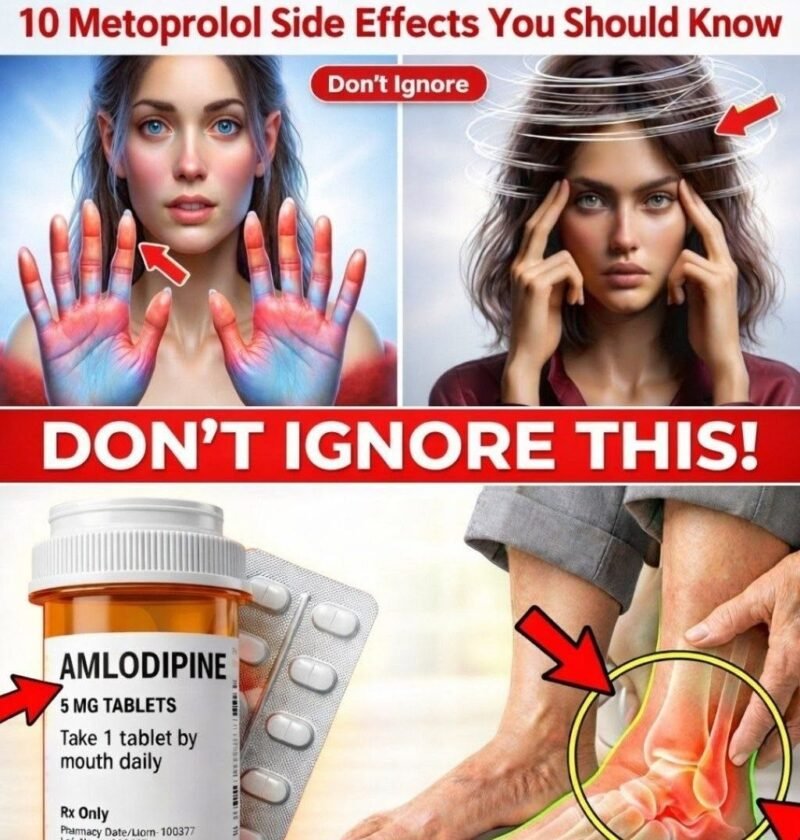
That headline is sensationalized. Metoprolol is a commonly prescribed beta-blocker, and its side effects are well documented—not something doctors are secretly hiding.
10 possible metoprolol side effects
Tiredness or fatigue — one of the more common complaints.
Dizziness or lightheadedness — particularly when blood pressure drops too much.
Slow heart rate (bradycardia) — beta-blockers intentionally reduce heart rate, but it can occasionally become too slow.
Low blood pressure — may cause weakness or faintness.
Cold hands and feet — reduced peripheral circulation can cause this sensation.
Shortness of breath — uncommon, but important, particularly in people with asthma or other airway disease.
Sleep disturbances or vivid dreams — some people experience changes in sleep.
Depressed mood — mood changes have been reported, although the relationship isn’t straightforward.
Sexual dysfunction — decreased libido or erectile difficulties can occur in some people.
Worsening heart failure symptoms or fluid retention — this is uncommon and is particularly important when starting or changing the dose.
One important warning
Don’t suddenly stop metoprolol unless a healthcare professional specifically tells you to. Abrupt withdrawal can cause a rapid increase in heart rate and blood pressure and can potentially trigger angina, heart rhythm problems, or a heart attack, particularly in people with coronary artery disease.
If you’re taking metoprolol and experiencing fainting, severe shortness of breath, chest pain, or an unusually slow heartbeat, seek prompt medical attention.
If you tell me your metoprolol dose (for example, 25 mg, 50 mg, or 100 mg), whether it’s metoprolol tartrate or succinate, and why you take it, I can explain which side effects are most relevant to you.