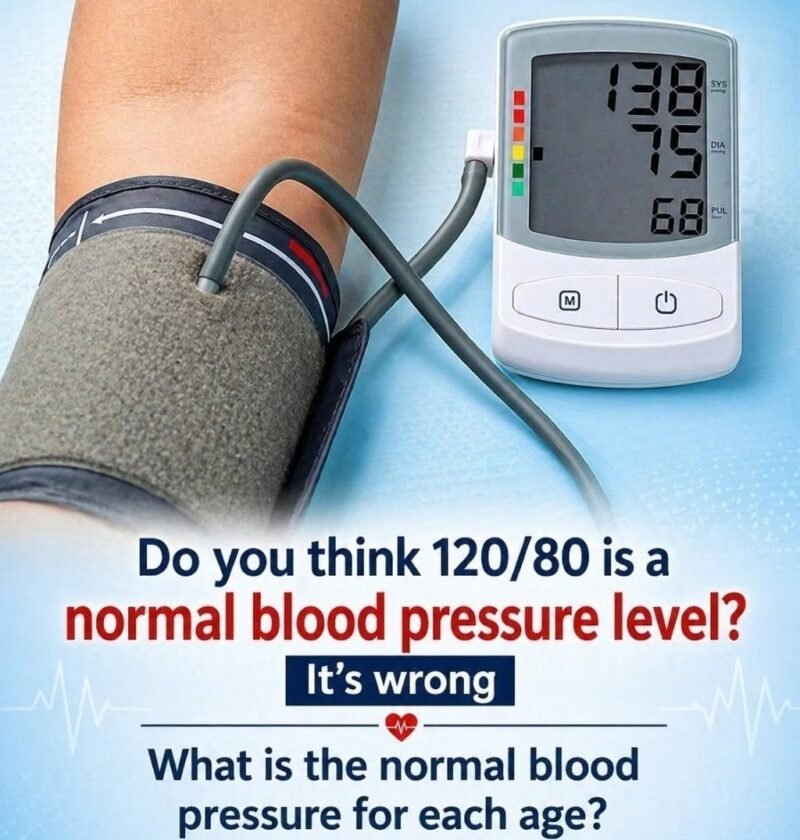
your blood pressure isn’t exactly 120/80, you are heading for a catastrophic stroke right now!” to terrify you into buying unproven supplements or obsessing over every minor meter fluctuation.
While blood pressure is a vital cardiovascular metric, the unvarnished medical reality is much more grounded: blood pressure naturally shifts as we age because our arteries undergo normal stiffening over time, meaning “normal” is a range that adapts to your life stage rather than a single universal number.
Let’s separate internet health panic from actual cardiology and medical guidelines.
Understanding the Numbers: Systolic vs. Diastolic
Before looking at age ranges, it helps to understand what the two numbers on your blood pressure cuff actually measure:
-
Systolic Pressure (The Top Number): Measures the pressure in your arteries when your heart beats and pumps blood out.
-
Diastolic Pressure (The Bottom Number): Measures the pressure in your arteries when your heart rests between beats.
Normal Blood Pressure Ranges by Age Group
According to major cardiovascular organizations (such as the American Heart Association and the American College of Cardiology), optimal blood pressure for healthy adults is generally considered less than 120/80 mmHg. However, acceptable targets shift slightly across the lifespan as blood vessels naturally age:
1. Young Adults (Ages 18–39)
-
Target Range: Typically less than 120/80 mmHg.
-
The Context: In younger adults, elastic, flexible arteries easily accommodate blood flow. Readings consistently creeping above 130/80 mmHg in this age group are considered elevated and warrant a closer look at lifestyle factors like stress, sodium intake, and physical activity.
2. Middle-Aged Adults (Ages 40–59)
-
Target Range: Generally under 130/80 to 135/85 mmHg.
-
The Context: As we move through our 40s and 50s, the collagen and elastin fibers in our arterial walls begin to break down slightly, causing arteries to stiffen. This natural structural change causes the top (systolic) number to rise gradually.
3. Older Adults (Ages 60 and Beyond)
-
Target Range: Often managed around 130/80 to 140/90 mmHg, depending on overall health and individual physician guidance.
-
The Context: In older age, isolated systolic hypertension (where the top number is high while the bottom number remains normal) becomes very common due to arterial stiffness. Doctors balance strict blood pressure control with protecting brain and kidney perfusion, ensuring targets are safe and tailored to the individual rather than aggressively forcing an arbitrary number.
Why Single Readings Don’t Tell the Whole Story
If you check your blood pressure at home and see a high number, don’t panic. Blood pressure fluctuates constantly throughout the day in response to:
-
Stress or Anxiety: (Including “white coat syndrome” at a doctor’s office).
-
Caffeine, Exercise, or Heavy Meals: All temporarily elevate readings.
-
Cuff Fit: Using a cuff that is too small or placing it incorrectly can artificially inflate numbers.
True hypertension (high blood pressure) is diagnosed only after multiple elevated readings taken over several separate occasions, not from a single anxious snapshot.
The Bottom Line
Blood pressure targets change as your body matures. Instead of stressing over a single reading, focus on the fundamentals that keep your cardiovascular system healthy: regular physical activity, a balanced diet low in excess sodium, smoking cessation, and routine check-ups with your physician.