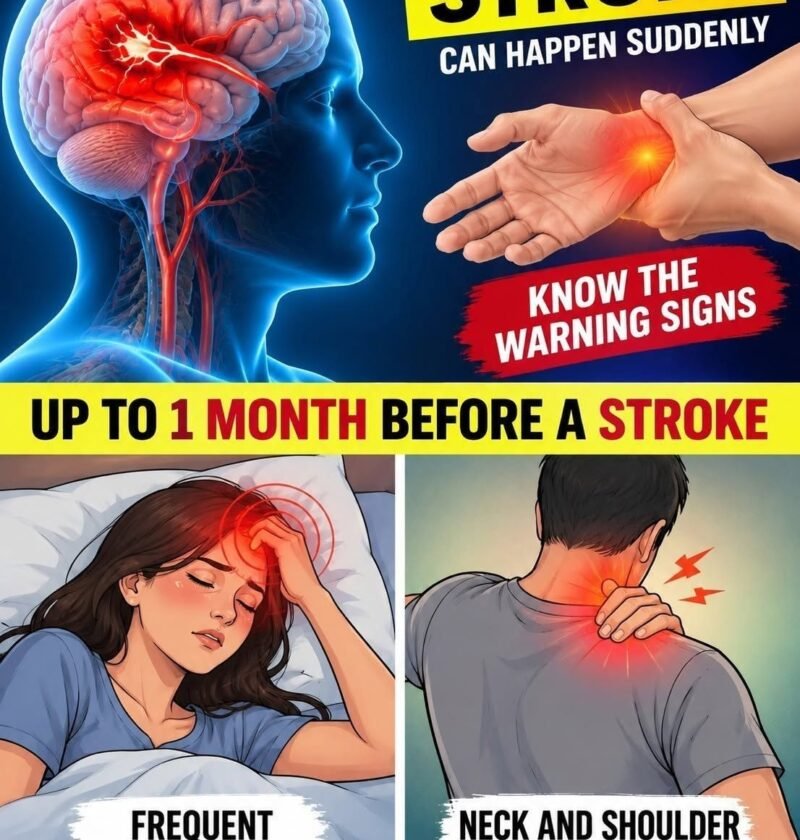
Recognizing a stroke early is one of the most powerful ways to protect yourself or a loved one from permanent disability or tragedy. When a stroke strikes—whether from a blocked artery (ischemic) or a ruptured blood vessel (hemorrhagic)—brain cells begin dying at a rate of nearly two million per minute.
To make recalling the most common stroke symptoms effortless, medical professionals rely on the FAST acronym. Here is what every single letter stands for, followed by crucial atypical signs that are often missed.
The FAST Warning Signs
-
F – Face Drooping: Does one side of the person’s face droop, or is it numb? If you ask them to smile, is the smile uneven or lopsided?
-
A – Arm Weakness: Is one arm weak or numb? If the person tries to raise both arms, does one drift downward or fail to lift equally?
-
S – Speech Difficulty: Is their speech slurred? Are they unable to speak clearly, or do they struggle to understand simple sentences when you talk to them? (Try asking them to repeat a simple sentence, like “The grass is green”).
-
T – Time to Call Emergency Services: If you observe any of these signs—even if they fluctuate or disappear temporarily—call emergency services immediately. Note the exact time the symptoms started, as this window dictates emergency treatment options.
4 “Hidden” Stroke Signs to Watch For
While FAST covers the classic indicators, strokes that affect specific areas of the brain (like the brainstem or cerebellum) can present with entirely different, easily overlooked red flags:
-
Sudden, Severe “Thunderclap” Headache: A blinding, out-of-nowhere headache that hits with maximum intensity instantly—often described as the “worst headache of your life”—can be a warning sign of a hemorrhagic stroke (brain bleeding).
-
Sudden Vision Changes: A abrupt loss of vision in one or both eyes, or double vision that makes it impossible to focus on objects.
-
Sudden Confusion and Disorientation: Struggling to comprehend where you are, sudden memory blanks, or difficulty processing basic thoughts.
-
Sudden Loss of Balance or Coordination: Unexplained dizziness, severe loss of balance, or stumbling as if intoxicated, especially when combined with any of the other symptoms.
The Golden Rule: Never “Wait It See”
A transient ischemic attack (TIA)—often called a “mini-stroke”—features stroke symptoms that resolve within a few minutes or hours. Never brush these off. A TIA is a major warning sign that a full-scale, devastating stroke may be right around the corner.