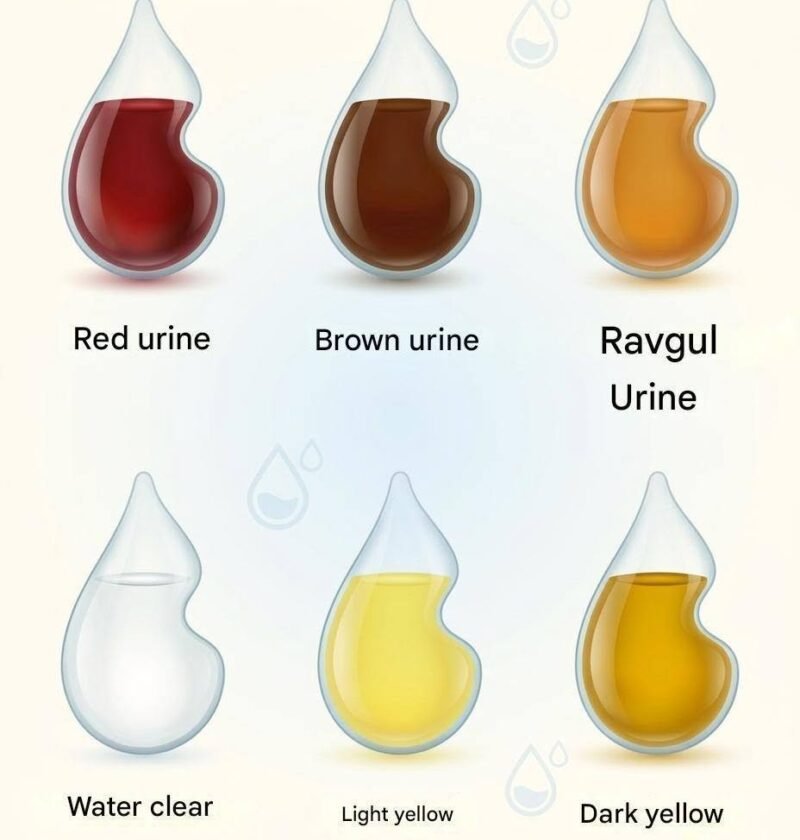
Urine color can provide useful clues, but color alone can’t diagnose a disease. Hydration, foods, medicines, and supplements can all change it.
💧 Common urine colors
-
Pale yellow: Usually a sign of adequate hydration.
-
Dark yellow/amber: Often means you’re dehydrated. Drinking fluids usually makes it lighter.
-
Completely clear: You may be drinking more fluid than you need. Persistent excessive thirst and very clear urine can also warrant medical evaluation.
-
Pink or red: May be caused by blood, but foods such as beetroot can also do this. Unexplained red or bloody urine should be checked.
-
Brown or cola-colored: Can occur with significant dehydration, liver problems, certain medicines, or muscle breakdown and warrants medical attention if unexplained.
-
Orange: Can be caused by dehydration or certain medicines and supplements; liver or bile-duct problems are another possibility.
-
Blue or green: Uncommon, but can result from certain medications, dyes, or occasionally infections.
-
Cloudy or milky: Can occur with urinary infections, crystals, or other substances in the urine.
🚨 When to get checked
Seek medical advice if urine is persistently red, brown, very cloudy, or unusually colored without an obvious explanation, particularly if you also have pain, fever, burning when urinating, swelling, or changes in how much you urinate.
One important point: foamy urine isn’t really a color issue. Persistent excessive foam can sometimes indicate protein in the urine and is worth discussing with a clinician.
If you tell me what color your urine is and whether you have any other symptoms, I can explain the most likely possibilities.