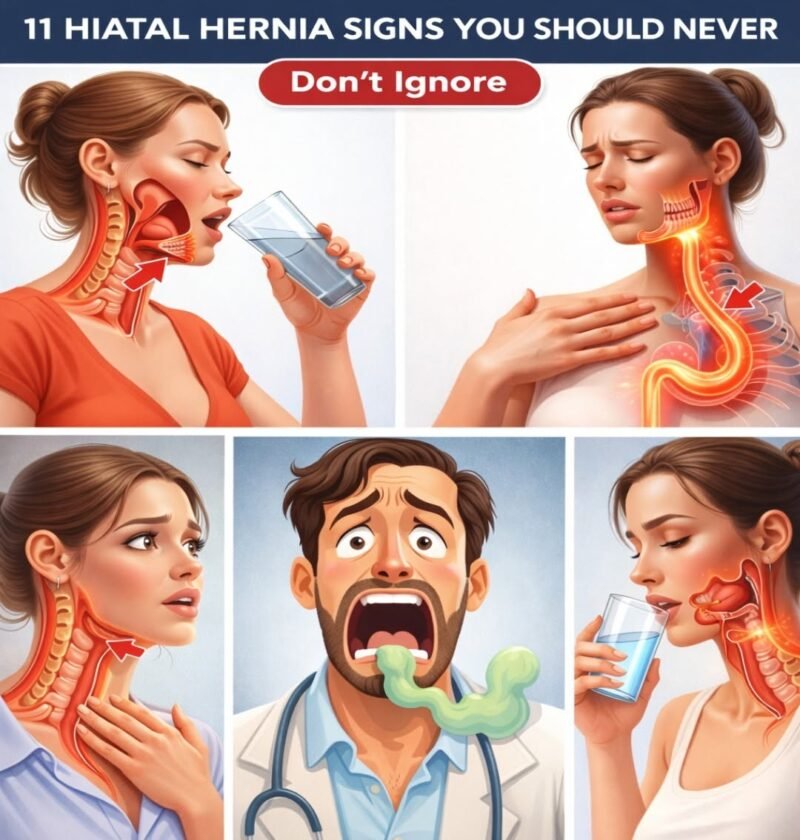
Hiatal hernias happen when a portion of the stomach pushes upward through the diaphragm—the muscle wall separating your chest and abdomen. While small hiatal hernias often cause no issues at all, larger ones can lead to distinct physical symptoms, particularly when they interfere with digestion or acid control.
Here are 10 key signs and symptoms of a hiatal hernia you should know:
1. Frequent Heartburn (Acid Reflux)
This is the most common symptom. A hiatal hernia can disrupt the normal barrier between your stomach and esophagus, allowing stomach acid to flow upward, causing a burning sensation in your chest (especially after eating or when lying down).
2. Chest Pain
Chest discomfort caused by a hiatal hernia can sometimes mimic heart trouble. It typically feels like a dull ache or burning pressure behind the breastbone, often triggered by bending over, lifting, or eating heavy meals. (Note: Always treat unexplained chest pain with caution and seek emergency care if you suspect a heart attack).
3. Difficulty Swallowing (Dysphagia)
If the hernia becomes large or pinches the esophagus, you might feel like food is getting stuck in your throat or chest. This can make swallowing solids or liquids uncomfortable or difficult.
4. Regurgitation of Food or Liquids
You may experience a sudden sour-tasting fluid or undigested food backing up into your mouth or throat, especially when you bend down or lie flat shortly after a meal.
5. Abdominal or Stomach Bloating
Many people with hiatal hernias report feeling uncomfortably full very quickly during a meal (early satiety), accompanied by excessive gas, abdominal distension, and bloating.
6. Shortness of Breath
A very large hiatal hernia can take up physical space in the chest cavity, putting pressure on your lungs and diaphragm. This can make it feel harder to take a full, deep breath, particularly when lying down.
7. Burping or Belching
Disruption of the lower esophageal sphincter makes it easier for trapped air to escape upwards, leading to frequent or excessive burping.
8. Nausea and Vomiting
Irritation of the stomach or esophagus from being displaced can trigger bouts of nausea. In more severe or acute cases, it can lead to vomiting.
9. Fatigue or Anemia (from Chronic Bleeding)
If a hiatal hernia causes chronic, microscopic irritation or ulcers (known as a sliding or rolling hernia complication), it can lead to slow, hidden blood loss. Over time, this results in iron-deficiency anemia, causing persistent fatigue, weakness, and pale skin.
10. Severe, Sudden Upper Abdominal or Chest Pain (Emergent Sign)
While most symptoms are chronic and mild, a paraesophageal hernia (where part of the stomach squeezes alongside the esophagus and gets trapped or twisted) is a medical emergency. It causes sudden, severe chest or upper abdominal pain, vomiting, and an inability to swallow.
When to See a Doctor:If you experience frequent heartburn, chronic digestive discomfort, or any of the more severe symptoms listed above, it is important to consult a healthcare professional. They can perform diagnostic tests—such as an endoscopy, barium swallow, or esophageal manometry—to confirm whether a hiatal hernia is present and recommend the right treatment plan.
Would you like some tips on lifestyle and dietary changes that can help manage hiatal hernia symptoms?