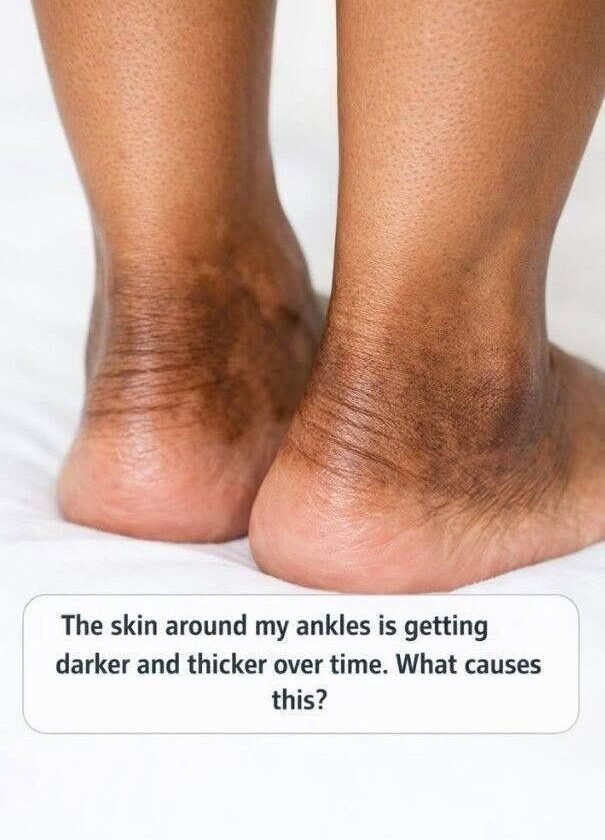
The appearance alone cannot confirm the cause, but the location and whether one or both ankles are affected can provide useful clues.
Common causes
Blood can pool in the lower legs when the veins struggle to return it to the heart. This can cause brown discoloration, swelling, itching, and gradually thickened skin around the ankles. It may worsen after standing for long periods.
Eczema, contact dermatitis, tight footwear, or repeated rubbing can make the skin darker and thicker over time.
These conditions can contribute to certain skin changes. Insulin resistance more typically causes dark, velvety skin around the neck, armpits, or groin than isolated ankle changes.
Previous inflammation, injuries, certain medications, and less commonly other medical conditions can cause persistent pigmentation or thickening.
What you can do now
-
Moisturize daily: Use a fragrance-free cream or petroleum jelly to reduce dryness and protect the skin.
-
Elevate your legs: If your ankles swell, raise your legs on pillows when resting.
-
Keep moving: Walking and regular ankle movements help support circulation.
-
Avoid scratching and harsh skin-lightening products: These may worsen irritation and discoloration.
-
Arrange a medical examination: Because the changes are progressing, a clinician should assess your skin and circulation. Depending on the findings, they may check your blood sugar or perform a leg-vein ultrasound.
Seek urgent medical care if one leg suddenly becomes swollen, painful, red, or warm. Chest pain or sudden shortness of breath requires emergency care.
Let me ask you 4 quick questions
Your answers can help narrow down the likely cause.
2. What color is the skin?
3. Do your ankles or lower legs swell?
4. How does the skin feel?
Help identify the likely cause