Viral fitness reels love to pitch quick, 10-second stretches as an instantaneous “miracle cure” for deep glute pain and stubborn sciatica, claiming a single pose will permanently release your hips.
Physical therapists and orthopedic specialists want to offer a more grounded reality: while targeted stretching is a powerful tool for managing piriformis syndrome, true relief requires understanding what is happening anatomically inside your hip.
What is Piriformis Syndrome?
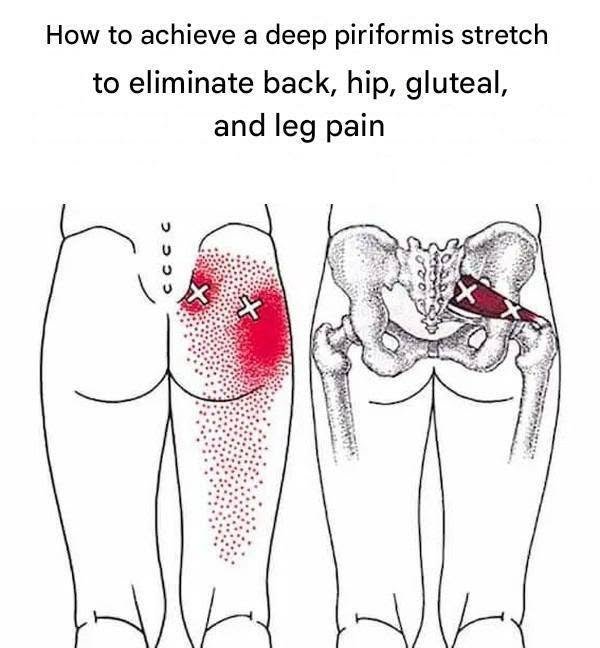
The piriformis is a small, deep muscle located in the buttocks behind the gluteus maximus. It helps rotate the hip outward and stabilize pelvic movement.
-
The Issue: Running directly underneath—or sometimes right through—the piriformis muscle is the sciatic nerve.
-
The Compression: When the piriformis muscle becomes tight, inflamed, or goes into spasm, it can pinch or irritate the sciatic nerve, sending sharp pain, tingling, or numbness down the back of the leg (mimicking true lumbar sciatica).
Evidence-Based Stretches and Relief Strategies
When the muscle is locked in spasm, gentle, consistent mobility work helps release tension without aggravating the nerve:
-
The Figure-Four Stretch: Lie on your back with knees bent and feet flat on the floor. Cross your affected ankle over the opposite knee. Reach your hands through to gently pull your uncrossed thigh toward your chest until you feel a deep, comfortable stretch in your buttock. Hold for 30 seconds and release.
-
The Seated Piriformis Stretch: Sit upright on a stable chair. Cross your painful leg over your opposite knee, keeping your spine straight. Slowly hinge forward at your hips until you feel a gentle stretch in the glute. Avoid rounding your lower back.
-
Addressing the Root Cause (Stability vs. Tightness): Often, a tight piriformis is actually overworking to compensate for weak hip stabilizers or glutes. Incorporating gentle strengthening exercises (like clamshells or side-lying leg raises) alongside stretching provides much longer-lasting relief than stretching alone.
The Reality Check: When to Consult a Professional
-
Differentiate the Source: Because sciatic pain can originate from a herniated disc or spinal nerve root compression in your lower back, it is important to get an accurate diagnosis if pain is severe, constant, or accompanied by foot drop or muscle weakness.
-
Avoid Aggravating Triggers: Prolonged sitting on hard surfaces or intense, repetitive impact can exacerbate spasms. Taking breaks to stand, walk, and stretch throughout the day can make a massive difference.